Why Is My New Cat Scared of Me? 5 Trust-Building Strategies That Work
Adopting a new cat is one of the most rewarding relationships you can build — and one of the most misunderstood. If your new cat is hiding under the bed or bolting the moment you enter the room, you are not doing anything wrong. You are witnessing a biological survival strategy, and with the right approach, you can guide them through it.
To truly help a fearful cat, you need to become a behavioral detective. Every unusual action is data. Here is exactly what your cat is communicating, structured around the core phases of feline adjustment: understanding shelter shock, controlling the environment, and building trust through incremental wins.
If your cat shows any new or worsening behavior, rule out physical illness with a vet first. Pain can look identical to fear or aggression. Only once your vet clears them should you focus entirely on behavioral and environmental causes.
What “Shelter Shock” Actually Is (and Why It’s Not Your Fault)
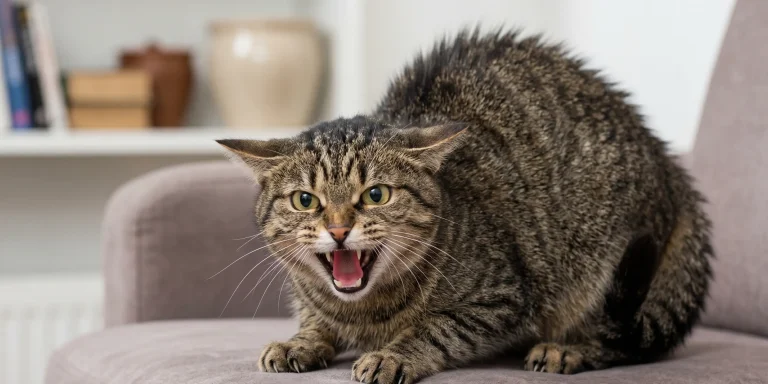
The single most important thing to understand: a fearful new cat is not a broken cat. Whether your cat came from a rescue shelter, a foster home, or life on the streets, they are experiencing what behaviorists call shelter shock — a state of acute sensory overload triggered by a sudden change of environment.
Unfamiliar sights, strange smells, unpredictable sounds, and the looming presence of unknown humans all activate a cat’s primal threat-assessment system. The instinctive response is to become small and unseen while the brain processes whether this new territory is safe or lethal. A cat hiding under furniture for the first one to two weeks is not a failure of your relationship — it is a biological imperative.
A cat’s previous experiences heavily influence their starting point. Specific stressors — prolonged shelter stays, other animals, a fear of men, loud voices, or heavy footsteps — can dramatically lower their initial willingness to engage. Understanding this context prevents you from personalizing their withdrawal.
The adjustment period is the timeframe during which your cat decides whether your home is a threat or a sanctuary. Your role during this phase is not to accelerate trust — it is to consistently prove that nothing bad happens when you are present.
Decoding Fearful Cat Behaviors: What Each Action Actually Means
Before building a trust strategy, you need to understand the internal motivation behind each behavior. Fear is not random — every action serves a specific survival purpose.
| Behavior you see | What it actually means |
|---|---|
| Escaping the room when you approach | Response to human stature — your height and forward movement register as an imposing predatory threat. |
| Only exploring or vocalizing at night | Assessing territorial safety when the “predators” — you, other pets — are asleep and non-threatening. |
| Retreating to the back of a bed or sofa | Creating a “safe dent” — a position where they cannot be ambushed from behind, satisfying the survival instinct. |
| Playing for only 5 minutes then retreating | A significant win. The hunt drive is successfully overriding the fear drive for that window of time. |
Even a single five-minute play session is a meaningful milestone. It signals that engagement is beginning to compete with — and occasionally defeat — the fear response.
If the same fearful behaviors persist after two weeks without any improvement, consider whether a specific stressor in the environment — sound, smell, other pet — has not yet been identified.
Setting Up “Base Camp”: The Foundation Everything Else Builds On
Environmental control is the most powerful tool available to you. By creating a curated Base Camp — a single manageable safe room — you give your cat a defined territory they can confidently own before expanding to the wider home.
A Base Camp should contain all the elements of feline success: high-quality food, fresh water, engaging toys, and a scratcher. Most critically, it needs an elevated bed near a window. While hiding under furniture is a fear retreat, perching on an elevated surface with a window view is a confidence payoff — it allows observation from a position of security, actively building the cat’s sense of ownership rather than just containing fear.
Proactively block inaccessible areas like the void under the bed. Replace them with covered carriers or low tents — spaces where the cat feels equally hidden but remains accessible to you. This prevents your cat from disappearing into an unreachable safety zone during the bonding phase.
Also maintain a predictable daily routine. Feeding at the same times each day, playing at consistent intervals, and keeping ambient noise levels stable all reduce the cognitive load on a cat who is still assessing whether the environment is safe. Predictability is security.
Getting Down to Cat Level: The Posture Shift That Changes Everything
From a cat’s perspective, a standing human — especially one moving toward them — is a towering, forward-moving predatory figure. Changing this power dynamic is not optional; it is foundational to every trust interaction that follows.
The solution is what behaviorists call the Chair and Floor Strategy: bring a chair into the safe room or sit directly on the floor. By lowering yourself, you immediately reduce the perceived threat of your physical presence. Once at cat level, shift into “Feral Cat Story Time” mode:
-
The No Eyes, No Hands Rule
Direct eye contact and reaching hands are interpreted as predatory hunting behaviors. Soften your gaze, look slightly away, and keep your hands visibly occupied.
-
Occupied Attention
Sit on the opposite side of the room with a book or magazine. Eyes and hands pointed elsewhere signal that you have no intention of grabbing or cornering them.
-
The Soothing Voice
Read aloud in a low, calm tone. This creates a positive association: your presence and voice consistently predict safety rather than unpredictability.
Over time, this consistency creates a “Challenge Line” — a threshold the cat will voluntarily cross to eat, explore, or eventually approach you, entirely on their own schedule.
Bribery, the Nose-First Philosophy, and the Millimeter Wins Method
There is a profound neurological link between a cat’s sense of smell and their emotional state. In feline behavior: when the nose starts working, the brain follows. High-value, aromatic treats — tuna, chicken, freeze-dried meat — can physically bypass the fear response at the neurological level.
Even when a cat’s ears are pinned back and their body is tense, the moment they begin to sniff, their defensive posture is already softening. Use this to build trust through progressive spatial wins:
Drop treats near their safe spot or carrier entrance. Do not place them; drop and step away. Let the cat investigate entirely on their own terms.
Move the drop point progressively further toward the middle of the room each day. Eventually offer treats from a flat, completely still palm — no reaching toward them.
This progression functions like what behaviorists call the Trust Roller Coaster: small incremental wins — called Millimeter Wins — accumulate until a tipping point is reached. Once enough ticks accumulate, confidence stops needing to be carefully constructed and begins accelerating on its own.
Behavioral research on feline anxiety consistently identifies environmental predictability as the most impactful factor in reducing chronic fear in indoor cats. Routine, patience, and incremental exposure outperform any shortcut approach.
Quick-reference summary
- Hiding for the first one to two weeks is normal shelter shock — a biological survival response, not a relationship failure.
- Every fearful behavior has a specific internal motivation; read it accurately before deciding how to respond.
- Set up one dedicated safe room (Base Camp) before giving your cat access to the wider home.
- Sit on the floor or a low chair — your standing height reads as predatory. Get to cat level before attempting any interaction.
- High-value stinky treats bypass the fear response neurologically: when the nose starts working, the brain follows.
- Celebrate Millimeter Wins. A five-minute play session is a real milestone. Progress is not linear — it tips.
Frequently Asked Questions About Fearful New Cats
Not initially. When a cat explores the home unsupervised, their attachment forms with the territory rather than with you. You want to be their guide through each expansion. Supervising room-by-room exploration preserves your role in the relationship and prevents regression into a primal, disconnected state.
The bed is their “safe dent” — a position where their back is protected and they can observe approaching movement. They feel less exposed there, which increases their tolerance for touch. Respect this entirely. As confidence grows across more of the room, the petting zone will expand naturally along with it.
The opposite — it is a significant milestone. For a fearful cat, five minutes of play means their hunt drive successfully overrode their fear drive for that window. Celebrate it. Replicate the conditions. Those windows will lengthen as trust accumulates over time.
Stop all forward movement while standing. Drop immediately to floor level — sitting cross-legged is ideal — and go straight into Feral Cat Story Time mode. Open a book, look away, speak softly. Your arrival needs to become a reliably boring, non-threatening event before any other progress is possible.
It varies significantly. Mildly stressed cats may begin relaxing within a week to ten days. Cats with deeper trauma or prolonged shelter exposure may need several weeks or a few months to reach the tipping point. The timeline is less important than the direction — if Millimeter Wins are accumulating, progress is happening.
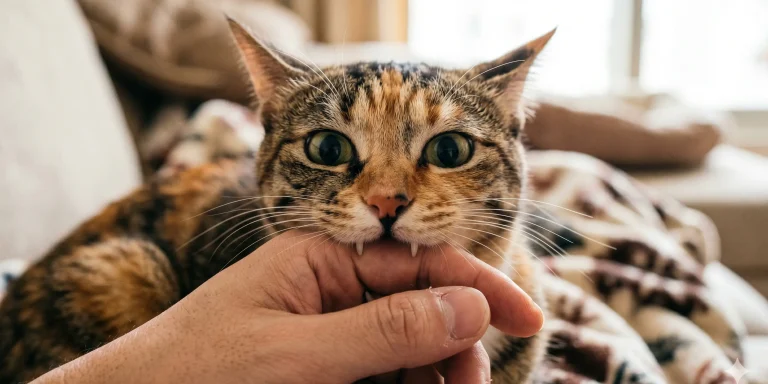
The clearest sign of an incorrect approach is prioritizing your own desire for interaction over the cat’s readiness for it. Forcing pets, prolonged staring, and following a retreating cat all register as predatory behavior to them. True guardianship means creating the conditions for success and then waiting — patiently — for the cat to choose you.
Your Brave Cat Is in There
Fearful behavior is not a sign of a damaged cat or a doomed relationship. It is a communication from an animal who has not yet received enough evidence that this new territory — and this new human — is safe.
Your cat has not rejected you. They have not yet decided to trust you. That decision cannot be forced, bribed all at once, or rushed on your timeline. It is earned through consistency: the same calm tone, the same non-threatening posture, the same patient presence, day after day.
Respect every Challenge Line. Celebrate every Millimeter Win. The tipping point will come — and when it does, their Mojo will take off faster than you expect.