Cat Peeing Outside the Litter Box: Causes, Solutions & Prevention
Inappropriate urination is the most common behavior complaint reported by cat owners. The solution depends entirely on the cause — and the cause is medical more often than most owners realize.
Why Cats Urinate Outside the Litter Box
A cat peeing outside the litter box is communicating that something is wrong — either physically or environmentally. Studies of feline house-soiling behavior indicate that environmental factors and medical issues can present identical symptoms, meaning they cannot be distinguished by observation alone.[1]
The first, non-negotiable step is a thorough veterinary examination. Attempting to address the problem as a behavioral issue before ruling out clinical diseases can lead to ineffective interventions and prolong your pet’s physical discomfort. If medical causes are successfully ruled out, a structured environmental intervention typically resolves most cases within two to four weeks.
Medical Causes — Always Rule These Out First
Several common medical conditions cause or contribute to inappropriate urination in cats. Attempting to correct the behavior without addressing the underlying condition will fail, and in some cases may cause the cat significant suffering by delaying treatment.
Feline Idiopathic Cystitis (FIC)
Feline idiopathic cystitis is the most common cause of sudden inappropriate urination in cats under ten years old. The condition causes intense pain and urgency, making reaching the litter box in time impossible. Research has documented that stress is a major trigger for FIC episodes, meaning that environmental stressors can directly cause physical urinary symptoms — making the medical-behavioral distinction even more blurred than it appears.[2]
Urinary Tract Infections (UTIs)
UTIs are more common in older cats and female cats. Symptoms include frequent small urinations, blood in the urine, and vocalization while urinating. Unlike FIC, UTIs require antibiotic treatment and will not resolve with environmental management alone.
Bladder Stones and Urethral Blockage
Urethral blockage is a veterinary emergency, particularly in male cats. A cat that is straining to urinate and producing little or no output, or that is vocalizing in pain, must receive emergency veterinary attention within hours.
A male cat straining to urinate and producing no output may have a complete urethral blockage. This is life-threatening within 24 to 48 hours. Go to an emergency veterinary clinic immediately — do not wait for a regular appointment.
Kidney Disease and Diabetes
Both conditions increase urinary frequency and volume significantly. The cat is not refusing to use the litter box out of preference; it simply cannot reach it in time, or the increased output makes the box seem perpetually soiled. Senior cats (over eight years) presenting with inappropriate urination should have bloodwork and urinalysis as part of the initial clinical investigation.
Litter Box Aversion: The Most Common Behavioral Cause
Once medical causes are ruled out, litter box aversion is the most frequently identified behavioral explanation. Cats develop aversion for specific, identifiable reasons, and each reason has a direct fix.
Inadequate Cleaning
Cats have an exceptional sense of smell, estimated to be 14 times more sensitive than ours. A litter box that smells acceptable to an owner may be strongly repulsive to a cat. The minimum standard is scooping once per day; twice daily is preferable in single-box households. Full litter replacement and box washing should occur weekly.
Wrong Litter Type
Research comparing cat litter preferences consistently shows that most cats favor fine, unscented clumping litter. Scented litters — marketed to owners rather than cats — are a common source of aversion. Large pellet litters, while convenient for owners, are frequently rejected. If you have recently changed litter types, revert to the previous type and conduct a gradual transition over two weeks.
Box Location
Litter boxes placed near noisy appliances, in high-traffic areas, or in locations where the cat must pass another pet to reach are commonly avoided. Cats require a sense of safety and escape routes while elimination occurs. Covered boxes, which trap odors, are rejected by many cats despite being preferred by owners for aesthetic reasons.
Insufficient Boxes
The one-plus-one rule (one box per cat, plus one extra) is not arbitrary. In multi-cat households, one cat can effectively block another’s access to a single shared box through social intimidation — which is not always visible to owners. Adding a box in a separate, private location frequently resolves the problem immediately.
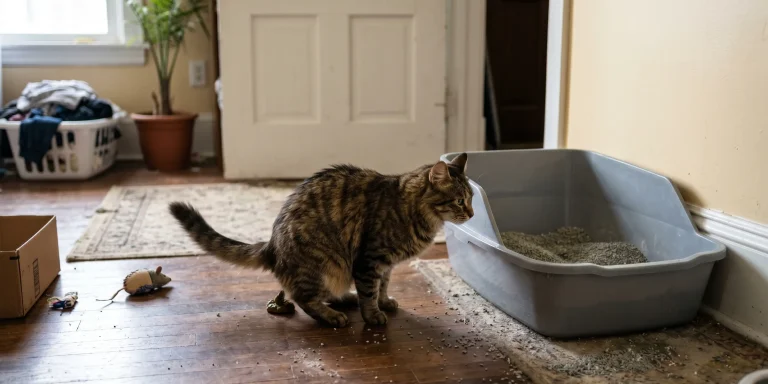
Place a temporary, uncovered litter box with fresh, unscented clumping litter in the exact location where your cat is eliminating inappropriately. If they immediately use the new box, the original box’s location, substrate, or cleanliness was the issue. This test takes only 24 hours and provides a clear signal.
Urine Marking vs. Inappropriate Elimination
These are two distinct behaviors with different causes and different solutions. Confusing them is one of the most common reasons interventions fail.
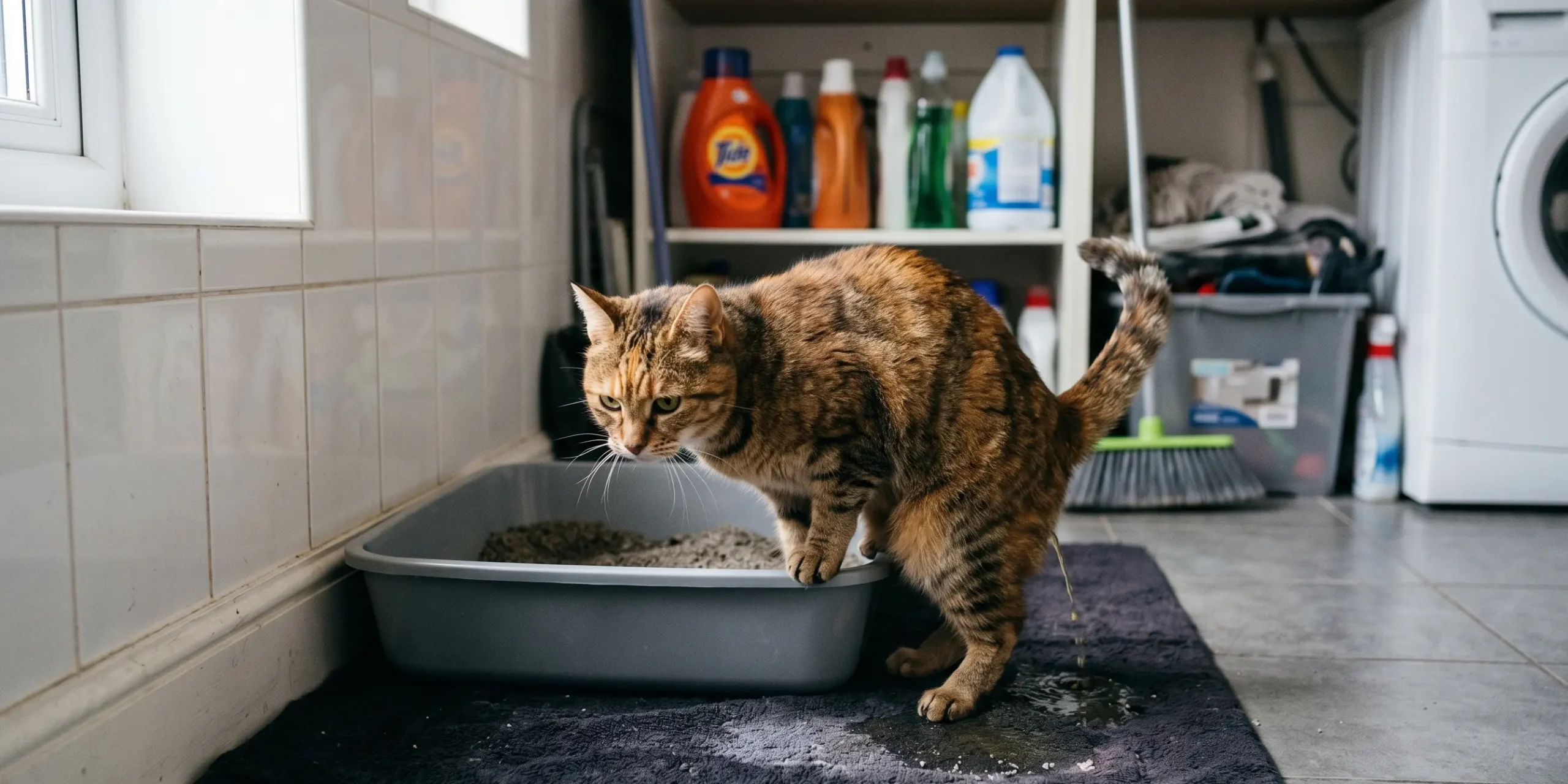
Inappropriate elimination involves the cat crouching and depositing a normal volume of urine on a horizontal surface — floors, bedding, or furniture cushions. The cat is using the location as a toilet substitute.
Urine marking involves the cat standing and spraying a small volume of urine onto a vertical surface — walls, door frames, or furniture legs. The tail typically quivers. The cat is communicating, not toileting. Neutering resolves marking in approximately 90% of male cats if performed before the behavior becomes habitual. In neutered cats, marking is almost always triggered by perceived territorial threats.
The Role of Stress and Anxiety
Research into feline behavior problems demonstrates that household stressors — including multi-cat tension, owner schedule changes, home renovations, and new pets — are significantly associated with inappropriate elimination.[3]
Stress does not cause the cat to “forget” litter box use. Instead, it triggers FIC episodes, lowers the cat’s tolerance for box conditions it would otherwise tolerate, and reduces the cat’s willingness to travel through the home to reach the box.
Stress management is therefore a genuine part of the treatment protocol, not an optional add-on. Pheromone diffusers, increased vertical space, structured interactive play, and a consistent daily routine all reduce baseline anxiety and improve litter box reliability.
Step-by-Step Correction Plan
A systematic approach is the most effective way to address and resolve inappropriate elimination:
- Veterinary examination within 48 hours. Schedule a clinical exam and urinalysis to rule out UTI, FIC, crystals, and diabetes. Do not skip this step.
- Audit the litter box setup. Verify you have enough boxes (number of cats + 1), assess cleaning frequency, evaluate litter type, and check locations for noise, traffic, and access blocks.
- Clean all soiled areas with an enzymatic cleaner. Neutralize the scent markings completely. Cover cleaned spots temporarily with aluminum foil or a feeding bowl to prevent re-use.
- Conduct a litter preference trial. Offer two boxes side-by-side with different litter types for five days and observe which box your cat uses consistently.
- Reduce identified stressors. Resolve multi-cat resource competition, minimize sudden routine changes, and use pheromone diffusers in the cat’s core living areas.
- Confine and retrain if necessary. For severe cases, temporarily restrict the cat to a smaller space (like a bathroom or spare room) with its bed, food, water, and a clean litter box. Slowly expand access as consistent box habits are re-established.
How to Clean Cat Urine from Floors, Carpet, and Furniture
The uric acid crystals in cat urine are not removed by standard cleaning products. Hot water reactivates dried urine and makes the smell temporarily stronger, which is why steam cleaning alone often makes the problem worse. The correct protocol is:
- Blot fresh urine immediately — do not rub, which spreads the stain.
- Apply an enzymatic cleaner liberally and allow it to sit for a minimum of ten minutes.
- Blot dry and allow the area to air-dry completely — avoid heat sources during drying.
- Repeat the application for set-in stains.
- Avoid any cleaner containing ammonia, which smells similar to urine to a cat and may attract them to re-soil the area.
A UV blacklight (365nm wavelength) makes dried cat urine fluoresce bright yellow-green in the dark. Use it to locate all soiled areas in a room before cleaning — you will often find spots that were not visible in daylight and would otherwise continue to attract the cat.
Frequently Asked Questions
Why is my cat suddenly peeing outside the litter box?
Sudden onset of inappropriate urination is most commonly caused by a urinary tract infection, feline idiopathic cystitis, or bladder stones — all of which require veterinary diagnosis. If medical causes are ruled out, litter box aversion linked to cleanliness, location, or litter type is the most likely behavioral explanation.
How do I stop my cat from peeing outside the litter box?
Rule out a medical cause first. Then: clean boxes daily, use unscented clumping litter, ensure one box per cat plus one extra in separate quiet locations, and clean soiled areas thoroughly with an enzymatic cleaner. Reduce household stressors and consider a pheromone diffuser if anxiety is a contributing factor.
How many litter boxes does a cat need?
The standard veterinary guideline is one box per cat, plus one additional box. A two-cat household needs at least three boxes, placed in separate locations. Multiple boxes clustered in one room do not adequately substitute for boxes in genuinely separate areas of the home.
Is my cat peeing outside the box out of spite?
No. Cats do not urinate outside the litter box as a deliberate act of revenge or spite. The behavior is always a response to a medical condition, a physical problem with the litter box setup, or stress. Treating it as defiance leads to ineffective and counterproductive responses — punishment in particular worsens the underlying anxiety driving the behavior.
What cleaning product removes cat urine smell permanently?
Only enzymatic cleaners break down uric acid crystals and permanently neutralize cat urine odor. Standard cleaners, steam cleaning, and products containing ammonia do not fully eliminate the scent marker and may draw the cat back to the same spot. Apply liberally, allow to soak for ten minutes, and air-dry completely.