Cat Mojo & Feline Affection: Understanding Your Cat’s Real Needs
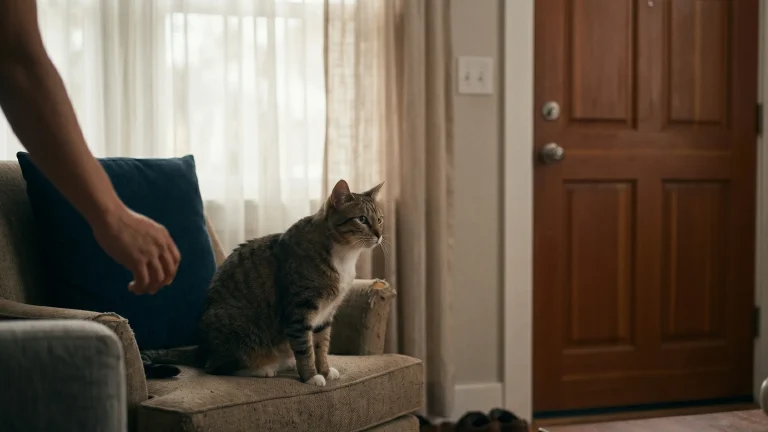
We’ve all been there: reaching out with a heart full of love, only to have your cat slip away like a shadow. This frustration—offering warmth and affection, only to be met with a flicked tail or a quick exit—reveals a fundamental truth: “I love you” in human language often translates to “I am overwhelmed” in feline.
To build a bond that is both deep and respectful, we must stop viewing cats through the lens of our own needs. The key to unlocking your cat’s happiness lies in understanding Cat Mojo—the security and confidence born from knowing they own their territory, are safe within it, and possess the skills to secure food there. This isn’t just psychology; it’s rooted in ancient biological imperatives that drive feline behavior.
By looking through the eyes of the cat—a creature that is uniquely both predator and prey—we can speak their language. Here’s what the science and behavior experts tell us about truly connecting with your cat.
Key Insight
Cat mojo is the foundation of feline confidence. When you provide for their mojo and honor their raw nature, you unlock a depth of love that is truly profound.
The Myth of the Solitary Loner: Why Your Cat Is More Social Than You Think
The most persistent stereotype in the feline world is that cats are aloof, independent, and solitary creatures who prefer isolation. This couldn’t be further from the truth.
While cats are indeed solitary hunters, they are remarkably communal in nearly every other aspect of their existence. In nature, cats form complex social webs that defy the “loner” trope entirely. Biological evidence is hidden in plain sight: female cats are born with more nipples than they need for their own litters. This anatomical feature allows them to communalize kitten-rearing, stepping in to nurse the offspring of other females within the colony.
For those managing multi-cat households, this insight is transformative. It means your cats don’t want to live in isolated silos; they crave a shared social structure. Rather than assuming they prefer solitude, owners should facilitate communal behaviors through scent-swapping and providing shared resources like communal feeding areas. Recognizing them as social beings allows for a bond based on group dynamics rather than mere co-habitation.
Play Is a Primal Need: The Hunt, Catch, Kill, Eat Cycle
When your cat tracks a feather wand, they aren’t “playing” in the human sense—they are executing a hardwired biological mission. Hunting is so deeply etched into their DNA that even a pampered indoor cat would revert to these instincts if returned to nature.
This “Play Equals Prey” cycle is the engine of their Mojo. Cats are hardwired for a specific sequence: Hunt → Catch → Kill → Eat. When owners see a cat ignore a toy, they often dismiss the behavior as laziness. In reality, we are witnessing a Mojo collapse. Without a successful hunting outlet, a cat loses the confidence that makes them whole.
The solution isn’t just offering more toys—it’s interactive play. This means you being on the other end of that wand, mimicking prey movements. Whether your cat is a four-month-old kitten or a fourteen-year-old senior, this ritual is essential. You’re not just providing exercise; you’re bonding by honoring their predatory nature and leaving them feeling fulfilled, confident, and deeply connected to you.
Vertical Territory: Building Confidence Through Environmental Design
Feline confidence is built on the axis of “environmental enrichment,” better known as Catification. Cats naturally traverse their world vertically. In the wild, trees and bushes provide the vantage points necessary to survey territory and avoid threats.
In the home, we replicate this via the “cat superhighway”—a series of shelves, perches, and walkways that allow a cat to navigate a room without ever touching the floor. By utilizing both the high and low axes, you effectively double the volume of their territory. This isn’t a luxury; it’s rooted in survival instinct.
Scratching: The Billboard of Feline Territory Marking
Scratching is frequently misinterpreted as a destructive habit or simple nail maintenance. While it does help shed dead nail sheaths, it is primarily a sophisticated form of broadcast communication.
Cats possess scent glands between their paw pads. Every time they sink their claws into a surface, they are leaving a dual-layered message: a visual score and a chemical scent mark. This is how they claim territory and communicate with other cats.
By providing sturdy, appropriate scratching surfaces—vertical posts, horizontal pads, or triangular scratchers—you’re not just saving your upholstery; you’re giving your cat a “bulletin board” to claim their space and maintain their social standing.
The Hydration Paradox: Understanding Your Cat’s Water Relationship
It is a common misconception that all cats crave running water. In reality, cats are descendants of desert animals. Biologically, they are adapted to function at levels of dehydration that would be catastrophic for other species. Historically, they evolved to obtain nearly all their hydration from the moisture in their prey.
This explains why some cats seem indifferent to the water bowl but fascinated by a dripping faucet. It’s often not thirst, but the prism effect. Moving water refracts light into dancing beams that mesmerize the feline eye. They may paw at the stream not because they want to drink, but because they are captivated by the light show. Understanding this allows owners to prioritize moisture-rich diets while respecting their cat’s “light-play” with the tap.
Passive Hunting: Why “Cat TV” is Actually Work
“Cat TV”—the act of a cat staring out the window—is a vital form of “passive engagement.” While it may look like idle time, research suggests cats spend as much time observing the window as they do sleeping.
This is a critical phase of the hunting process. In nature, roughly 90% of a cat’s hunting time is spent in a state of assessment and observation, with only the final 10% dedicated to the pounce. When your cat watches birds or traffic, they are working. They are engaging the raw cat by meticulously analyzing angles and waiting for the perfect moment, even if the glass remains a permanent barrier.
Remember
Window perches aren’t just entertainment—they’re essential mental stimulation. Provide comfortable, unobstructed perches where your cat can engage in this vital predatory behavior.
The Ritual of Vulnerability: The Slow Blink & Eye Language
In the feline world, the eyes are not just windows to the soul; they are primary tools of survival. While humans use direct eye contact to signal engagement and honesty, a cat perceives a steady, unblinking stare as a direct threat.
This is why the “Slow Blink”—what Jackson Galaxy calls the “Cat I Love You”—is so profound. By softening your gaze and slowly closing and then opening your eyes, you are performing a miracle of trust. You are telling your cat: I am so safe with you that I can afford to be vulnerable.
In a world where closing your eyes can literally mean death, this gesture is the ultimate currency of love. Beyond the slow blink, you can master the “Cat How You Doing”—a quick, friendly eye-click of recognition—or “The Bow,” which involves slightly averting your eyes. These subtle movements place you and your cat on an even playing field, signaling respect without dominance.
Touch vs. Petting: The Art of Asking Permission
It is a counter-intuitive truth of the feline-human bond: the less you force your affection, the more love you will receive. We often treat cats like small dogs or human children, picking them up or petting them whenever the urge strikes. However, true love in the feline sense is rooted in autonomy.
Instead of reaching over their head—which can be perceived as an overhead “predator” move—practice the “Ask Permission” technique. Offer your hand low and to the side, and then simply wait. Allow the cat to bridge the gap. When they choose to approach and rub their cheek against you, they are inviting you into their personal space.
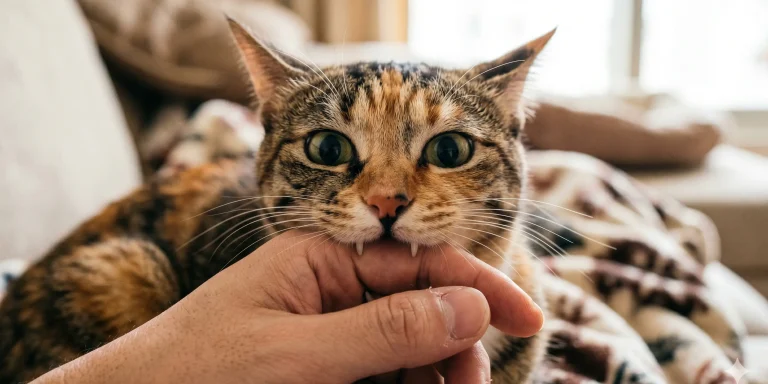
For many cats, prolonged petting can lead to sensory overstimulation, causing them to suddenly “get sick of it” or even react defensively. Mastering the art of the two-way street means recognizing when your cat prefers a simple chin scritch over a full-body massage. Respecting these boundaries is what transforms a simple pet into a trusted family member.
Catification & Litter Box Placement: Love as Environment
We often think of love as an action, but for a cat, love is an environment. Catification is the art of designing a home that honors the “Raw Cat” within. This means providing vertical spaces—cat trees and shelves—where they can survey their kingdom from a position of security, and “Cat TV,” such as perches by windows.
However, the most profound way to show environmental love is often the most overlooked: the litter box. Too many guardians prioritize human aesthetics, hiding litter boxes in cold garages, loud laundry rooms, or remote mudrooms. This is a failure of empathy.
To a cat, the litter box is an essential part of their environmental signature and security. By placing multiple boxes in “socially significant” areas—the rooms where the family actually spends time—you are telling your cat: you belong here. You are prioritizing their need for security over your desire for a hidden utility, and that is a powerful statement of care.
Wellness as Love: Addressing Hidden Pain & Nutrition
Because cats are masters at disguising pain—a survival instinct designed to hide weakness from predators—wellness is perhaps the most selfless love language.
Roughly 90% of senior cats suffer from arthritis, yet most will never cry out. They suffer in silence, simply becoming “less active” as they age. True love means being a proactive advocate for their health. This starts with nutrition.
As obligate carnivores, cats thrive on meat-based diets. While “junk” treats might provide momentary interest, high-quality nutrition ensures they don’t “feel crappy” as the years go by. Beyond the bowl, regular vet visits are essential for uncovering hidden pain. Don’t wait for symptoms; look into complementary therapies like acupuncture or cold laser therapy to keep your senior cat vital and comfortable.
The Ultimate Gift: The Power of Two (Or More)
There is a persistent myth that cats are solitary, aloof creatures who prefer a life of isolation. In reality, most cats thrive in a social structure. Especially for kittens, “two is better than one” isn’t just a catchy phrase—it’s a lifestyle philosophy.
Providing a feline companion is a gift that staves off boredom and provides a social model for behavior. When cats have a friend, they have someone who “speaks the native tongue” perfectly, providing a level of companionship that even the most dedicated human cannot replicate. Honoring their social nature by providing a friend is one of the most significant ways to ensure their long-term happiness and mojo.
The Essentials of Cat Mojo
- Recognize cats as social creatures, not solitary loners
- Engage in interactive play to honor the hunt-catch-kill-eat cycle
- Provide vertical territory for security and environmental control
- Offer appropriate scratching surfaces as territory markers
- Allow passive hunting through window perches and “Cat TV”
- Communicate trust through slow blinks and eye contact
- Ask permission before touching; respect boundaries on petting
- Design your home (Catification) to honor their primal needs
- Place litter boxes in “socially significant” areas
- Prioritize high-quality nutrition and preventative wellness
- Consider providing a feline companion for social enrichment
Never Do These Things
- Never force affection or prolonged petting if your cat pulls away
- Never stare directly into your cat’s eyes as a form of dominance
- Never hide the litter box in a remote location for your convenience
- Never skip interactive play, thinking toys alone provide stimulation
- Never assume water-seeking behavior means you need a water fountain
- Never isolate cats completely from each other without gradual introduction
- Never ignore signs of pain or behavioral changes in senior cats
Frequently Asked Questions
Cat mojo is the security and confidence born from the knowledge that they own their territory, are safe within it, and possess the skills to secure food. It’s the foundation of feline happiness and requires owners to honor the raw cat’s primal needs through play, environment, and respect for autonomy.
While cats are solitary hunters, they are highly social in most other contexts. They form complex social structures, communalize kitten-rearing, eat together, and groom each other. Most cats benefit from living with other cats or from human companionship.
Interactive play is key. A cat ignoring a toy isn’t laziness—it’s a sign they need engaging play with you. Move the toy unpredictably to mimic prey, engage daily, and tailor play styles to your cat’s hunting preferences. The toy is just the medium; your participation is essential.
Show affection by respecting autonomy: use slow blinks to signal trust, offer your hand low and to the side for them to approach, engage in interactive play, honor boundaries around petting, and create a Catified environment. The less you force affection, the more they’ll reciprocate.
Yes. “Cat TV” or window-watching is passive hunting—a critical phase where cats spend 90% of their time in observation and assessment. This is essential mental and predatory stimulation. Provide comfortable, unobstructed window perches for this vital behavior.
Place litter boxes in “socially significant” areas—rooms where the family spends time—not in remote garages or laundry rooms. Multiple boxes in accessible locations signal to your cat that they belong throughout the home, directly contributing to their sense of security and mojo.
Most cats benefit from feline companionship, especially kittens and younger cats. A companion provides social enrichment, combats boredom, and offers a relationship that humans alone cannot replicate. Proper introductions are essential for success.