Cat Pooping Outside the Litter Box: Why It Happens & How to Stop It
When a cat defecates outside its litter box but continues to urinate in it, the cause is almost always specific and identifiable. Here is how to find it and fix it.
Why Cats Defecate Outside the Litter Box
A cat that poops outside the litter box but still urinates in it is showing a specific defecation aversion — not a general litter box rejection. This pattern narrows the cause considerably. The two most common explanations are physiological pain during defecation (which the cat subsequently associates with the box) and a litter box setup that fails to meet their environmental preferences.
Epidemiological studies show that house-soiling (inappropriate elimination) is one of the most common behavioral complaints reported by owners, with defecation outside the box representing a significant subset of these clinic visits.[2] Because elimination disorders can stem directly from underlying medical issues, a thorough veterinary evaluation is the mandatory first step.
Gastrointestinal and Medical Causes
Any condition that makes defecation painful, urgent, or unpredictable can cause a cat to miss the litter box. The American Association of Feline Practitioners (AAFP) consensus guidelines highlight gastrointestinal disease and musculoskeletal pain as primary medical drivers in cats presenting with house-soiling behaviors.[1] Common medical contributors include:
- Constipation — the cat strains for extended periods and may defecate wherever it finally manages to pass stool.
- Diarrhea — acute urgency makes reaching the box impossible; this is a common cause of defecation near (but not inside) the box.
- Inflammatory Bowel Disease (IBD) — a chronic condition causing intermittent discomfort, urgency, and abdominal pain.
- Anal Gland Disease — impacted or infected anal glands cause acute discomfort during defecation, prompting the cat to avoid the box.
- Rectal Polyps or Masses — particularly in senior cats presenting with sudden changes in defecation habits.
If your cat is straining to defecate and producing nothing, or if there is blood in the stool, veterinary attention is required within 24 hours. Constipation leading to obstipation (complete inability to defecate) can become a life-threatening medical emergency within 48 to 72 hours.
Box-Specific Aversion for Defecation
Cats that have experienced painful defecation inside the litter box quickly form a negative association with that specific box, even after the medical cause has been treated. The solution requires introducing a new box in a new location while the association rebuilds — do not expect the cat to return immediately to the site of past painful episodes.
Additionally, the frequency of scooping is highly critical. Cats are generally much more sensitive to fecal odor than urine odor in their boxes. A box scooped once daily might be acceptable for urination but completely rejected for defecation. Increasing scooping frequency to twice daily resolves the issue in many cases without any other environmental changes.
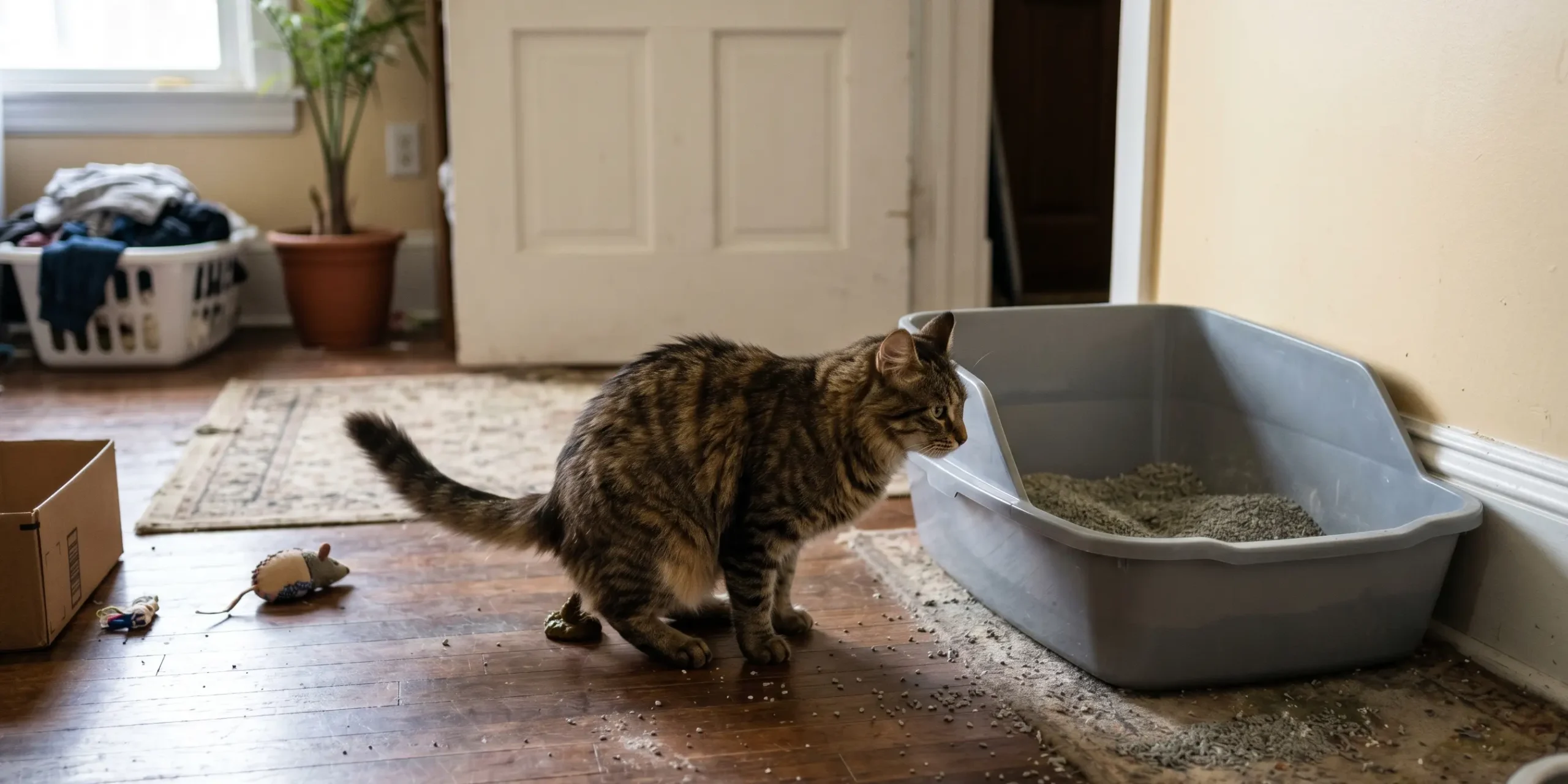
Note where on the floor the cat is defecating. If it is consistently next to the litter box, the cat is trying to use the box but finds the conditions inside unacceptable at the moment of need. If it is in a completely different location, the cat has established an alternative toilet site, suggesting the box’s location, cleanliness, or accessibility is the issue.
Box Size and Entry Point
Many standard litter boxes are too small for a cat to turn around comfortably, which is an instinctual requirement before defecation. Feline behavioral experts recommend a minimum box length of 1.5 times the cat’s body length (from nose to the base of the tail). Large plastic storage bins with a low-sided entry cutout make excellent, cost-effective alternatives to standard commercial boxes.
Older Cats and Mobility Issues
Senior cats suffering from osteoarthritis or hip dysplasia may continue to urinate in the box — which requires only a brief squat — but find the prolonged posture required for defecation painful.
The solution is providing a box with very low sides (5 cm or less at the entry point) placed on a non-slip mat, removing the need to climb over a high lip. Cutting an entry notch into the side of an existing high-sided box is a simple way to improve access for senior pets.
Stress, Anxiety, and Defecation Urgency
Just as in humans, stress can accelerate gastrointestinal motility in cats. A cat that is anxious about changes in the household — such as a new pet, a new baby, home renovations, or owner travel — may experience acute defecation urgency that outpaces its ability to reach the box.
This is a physiological response to stress, not a deliberate behavioral choice. Reducing underlying anxiety through environmental stability, synthetic pheromone support, and structured play sessions typically resolves the urgency within one to three weeks.
The Step-by-Step Correction Plan
Follow this systematic plan to identify the cause and restore correct litter box habits:
- Veterinary examination. Schedule a clinical exam and submit a stool sample. If your cat is straining or showing signs of pain, this is the first priority.
- Increase scooping frequency. Scoop the box at least twice daily for two weeks and observe whether the behavior improves.
- Introduce a new, larger box. Place it in the exact location where the cat has been defecating. If they use it, the old box or its location was the issue.
- Clean all soiled spots thoroughly. Neutralize urine and fecal odors using an enzymatic cleaner. Cover the spots with aluminum foil or a runner mat during retraining.
- Gradually reposition the new box. Once the cat is using the new box consistently for two weeks, slowly move it two to three centimeters per day toward its permanent location.
- Address environmental stressors. Use calming pheromone diffusers in main living areas, maintain a stable routine, and address resource competition in multi-cat households.
How to Clean Soiled Areas Properly
Standard household cleaners do not break down the uric acid crystals and organic compounds in cat waste. Using steam cleaners or hot water can reactivate dried urine, making the odor stronger. The correct protocol is:
- Blot fresh liquid waste immediately — avoid rubbing, which spreads the organic matter.
- Apply an enzymatic cleaner liberally and allow it to sit for at least ten minutes to digest the proteins.
- Blot dry and allow the area to air-dry completely — avoid applying direct heat.
- Repeat the application for set-in stains or older soiled areas.
- Avoid any cleaner containing ammonia, which smells similar to urine to a cat and may attract them back to the same spot.
Frequently Asked Questions
Why is my cat suddenly pooping outside the litter box?
Sudden defecation outside the box is commonly linked to gastrointestinal illness, constipation, pain during defecation, or a recent change to the litter box setup (such as a new litter type, box relocation, or reduced cleaning frequency). A vet check is the critical first step to rule out medical issues.
Why is my cat pooping outside the box but peeing in it?
This specific pattern points to a defecation-specific aversion rather than general litter box rejection. Pain during defecation, a box that is not scooped frequently enough for fecal odor, or a box that is too small to turn around in comfortably are the most common causes. A new, larger box in a new location often resolves the issue.
How do I retrain my cat to use the litter box?
Place a new litter box in the spot the cat has been using, and use unscented clumping litter. Once the cat uses it reliably for one to two weeks, move the box a few centimeters per day towards the target location. Clean all previously soiled areas thoroughly with enzymatic cleaner to remove the scent marker. Do not rush the repositioning — any regression means reverting to the last successful position for another week.
Should I punish my cat for pooping on the floor?
No. Punishment does not correct the underlying cause and increases anxiety, which makes elimination problems worse. The cat is responding to a physical or environmental problem — address the cause, not the symptom.