Redirected Aggression in Cats: Causes, Recovery & Prevention
Your cat attacked you without warning and you have no idea why. This guide explains exactly what happened neurologically, what to do in the next 48 hours, and how to prevent it from happening again.
Understanding Redirected Aggression
Redirected aggression is one of the most disruptive feline behavior problems precisely because it appears completely random. The cat attacks an owner or another pet in the household with no prior conflict, often in a moment that has no apparent connection to any provocation.
Understanding that this is a physiological neurological event — not a deliberate choice, not spite, and not a sign of an irreparably broken bond — is the most critical reframe in managing it effectively. Research indicates that redirected aggression cases, when correctly identified and managed, carry a positive prognosis with structured environmental intervention.[1]
What Happens in the Cat’s Nervous System
When a cat perceives a serious threat — particularly one it cannot escape or confront directly — the amygdala and hypothalamus trigger a cascade of physiological arousal. This activates the fight-or-flight response, elevating heart rate, releasing cortisol, and maximizing sensory sensitivity.[2] This intense state of panic or agitation does not simply switch off when the trigger disappears; the cat remains hyper-aroused for hours or days.
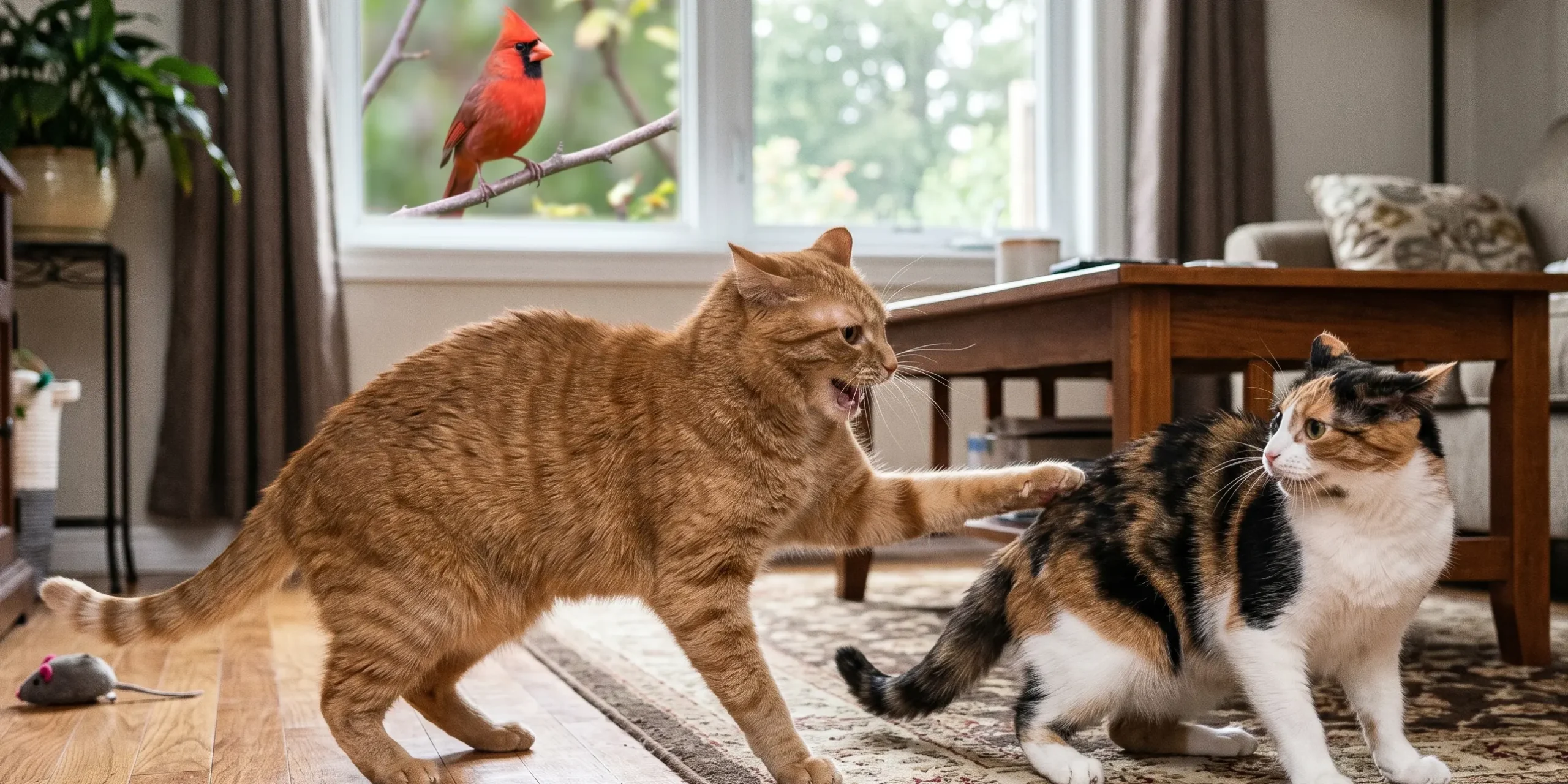
When an owner approaches a cat in this state, the cat’s primed nervous system perceives the movement as a direct threat. The resulting attack is not a personal retaliation; it is the physical discharge of accumulated physiological arousal on the nearest moving target. During this time, the cat is neurologically unable to evaluate the situation calmly.
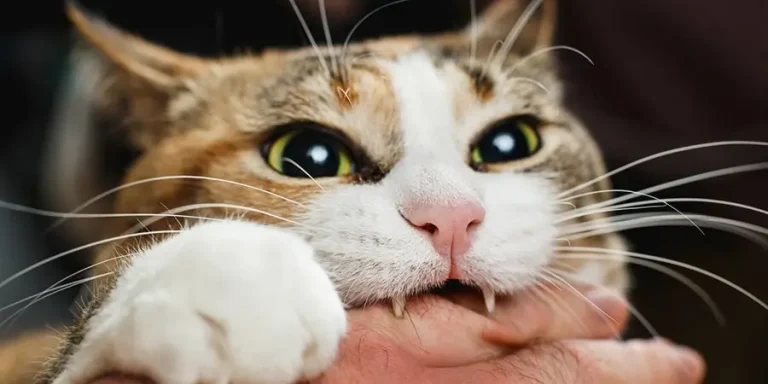
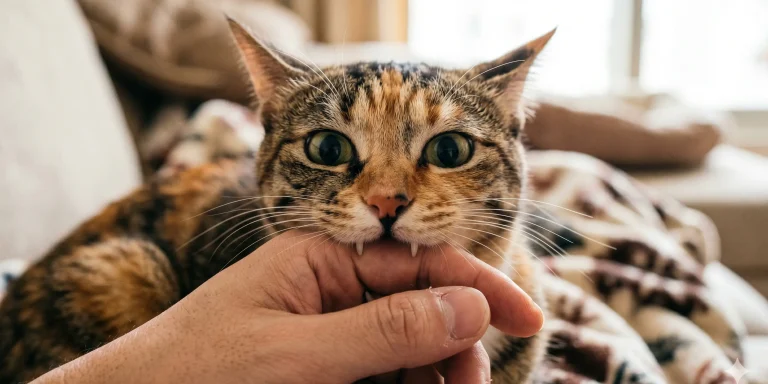
A cat in active redirected arousal is genuinely dangerous and should not be approached, touched, or spoken to in a soothing voice — which may be interpreted as approach behavior. Leave the room, close the door, and allow the cat complete quiet. Cat bites from highly aroused cats are deep puncture wounds with a high rate of infection. If you are bitten, wash the wound immediately with soap and water and seek medical advice the same day.
The Most Common Triggers
Redirected aggression is always triggered by a distinct event, even if the owner did not witness it. The most common catalysts include:
Outdoor Cats
The presence of a neighborhood cat visible through a window or glass door is the most common trigger. The indoor cat experiences intense territorial frustration because it cannot reach the intruder to chase it away.
Smells on Clothing or Objects
Cats rely heavily on olfactory communication. Unfamiliar scents of other cats brought in on coats, bags, or visitors’ shoes can trigger territorial alarm. An attack may occur the moment you walk through the door, which can be highly confusing since no visual trigger is present.
Loud Noises
Sudden or continuous loud sounds — such as fireworks, thunder, heavy machinery, or objects dropping nearby — can trigger a fear-arousal state that redirects onto the nearest living being.
Predatory Frustration
Watching birds, rodents, or insects through a window can build high levels of predatory arousal. If the cat is unable to complete the hunt, it may direct its hunting energy toward a nearby person or pet.
What to Do in the First 48 Hours
Immediate intervention is focused on ensuring human safety and allowing the cat’s neurological system to de-escalate:
- Leave the cat completely alone. Do not make approach attempt, eye contact, or speak. Place food and water near the cat and immediately leave the area.
- Identify the trigger. Check every window and door for outdoor cats. Smell the area for unfamiliar scents, and think back to what occurred 5 to 30 minutes before the attack.
- Separate cats in multi-cat homes. If the attack was directed at another household cat, separate them into different rooms with closed doors. Do not let them see or hear each other.
- Block or remove the trigger. Apply frosted window film to lower panes, remove bird feeders that attract outdoor cats, and use motion-activated deterrents in the garden.
- Observe baseline recovery. After 24 hours, check the cat from a safe distance. Is it eating, grooming, and resting normally? If not, continue separation and do not attempt contact.
Reintroduction After a Multi-Cat Incident
Rushing to put cats back together after a redirected aggression episode is the primary reason the problem becomes chronic. The victim cat now associates the attacking cat with a severe threat. Controlled reintroduction must proceed in gradual, positive stages:
- Days 1–3: Swap bedding daily to share scents. Feed both cats on opposite sides of the closed separating door. They must eat calmly before moving to the next stage.
- Days 4–7: Allow scent contact under the door (sniffing/pawing) while keeping visual lines blocked. Continue feeding at the door.
- Days 8–14: Replace the closed door with a baby gate or screen. Ensure both cats can view each other without hissing, growling, or refusing food.
- Day 14+: Conduct short, supervised free-contact sessions. Any sign of regression means immediately going back one stage for another week.
Synthetic feline facial pheromone diffusers placed in both cats’ core areas during the reintroduction process reduce baseline anxiety in both animals, improving the success rate of each stage. Deploy them before beginning the reintroduction, not after problems arise.
Long-Term Prevention
Preventing future redirected aggression requires managing triggers and lowering your cat’s baseline stress threshold.
Physical Trigger Management
- Apply frosted window film to the lower 60–80 cm of windows to block visual paths to outdoor cat territories.
- Remove wildlife feeders from view to reduce intense predatory frustration.
- Use motion-activated sprinklers or ultrasonic deterrents to keep neighborhood cats away from your home’s perimeter.
- Implement a scent “decontamination” routine: remove shoes and coats immediately upon returning home.
Lowering Baseline Arousal
A cat with low baseline stress requires a much stronger trigger to reach the threshold of redirected aggression. Provide daily, structured play sessions using wand toys (never hands) for 15 to 20 minutes to discharge energy. Increase vertical territory (cat trees, perches) and offer hiding spots to give the cat a secure sense of environmental control.[3]
The Week-by-Week Recovery Timeline
A typical recovery timeline follows a structured path to ensure stability:
Week 1: Isolation & De-escalation
Isolate the attacking cat in a quiet room with resources. No social contact. Focus on identifying and blocking the initial trigger. By day 5, the cat should be eating and grooming normally.
Week 2: Scent Exchange
Keep the cats physically separated but swap bedding and toys. Run pheromone diffusers in both living areas. Conduct play and feeding routines individually.
Week 3: Visual Introduction
Conduct brief visual introductions through a baby gate or slightly open door. Feed both cats near the barrier. Look for relaxed postures, slow blinking, and interest without tension.
Week 4+: Controlled Contact
Allow brief, supervised physical meetings in a neutral room. Gradually extend contact times over several weeks. A full reintroduction typically takes 4 to 6 weeks.
Frequently Asked Questions
What is redirected aggression in cats?
Redirected aggression occurs when a cat becomes intensely aroused by a trigger it cannot directly confront — typically another cat through a window or an unfamiliar smell — and attacks the nearest available target instead. The attack is not directed at the person or pet it strikes; it is the discharge of physiological arousal that has no other outlet.
How long does redirected aggression last in cats?
The acute arousal state following a triggering event can last from a few hours to 48 hours. During this time the cat may appear calm but can attack again with any new stimulus. Full behavioural baseline — normal eating, grooming, and resting — typically returns within 24 to 48 hours after the trigger is removed. Reintroduction in multi-cat households should not begin until both cats have been at baseline for at least 24 hours.
Will my cat attack me again after a redirected aggression episode?
Only if the original trigger is not removed or blocked, or if the cat is approached before it has returned to baseline. Once the trigger is dealt with and the cat has had 24 to 48 hours of undisturbed recovery, the risk of another episode is equivalent to what it was before the incident — provided the trigger does not recur.
How do I prevent redirected aggression in cats?
Block or remove the triggering stimulus — most commonly an outdoor cat visible through windows. Apply frosted window film to lower window panes, remove wildlife attractants, and use outdoor deterrents. Reduce the cat’s baseline arousal with daily structured play, pheromone diffusers, and adequate vertical space. Lower baseline arousal means a stronger trigger is required to reach the threshold for an episode.