Cat Allergies in Adults: Why They Develop Later in Life and What You Can Do
Introduction
Cat allergies are commonly associated with childhood onset, yet a significant number of adults develop allergic reactions to cats later in life with no prior history. This condition, often referred to as adult-onset cat allergy, can be confusing and distressing, especially for individuals who have lived with cats for years without issues.
Understanding why this happens requires examining immune sensitization, environmental exposure, and allergen biology. The good news is that modern allergy science provides multiple evidence-based strategies to manage symptoms while maintaining a relationship with your pet.
Understanding Adult-Onset Cat Allergies
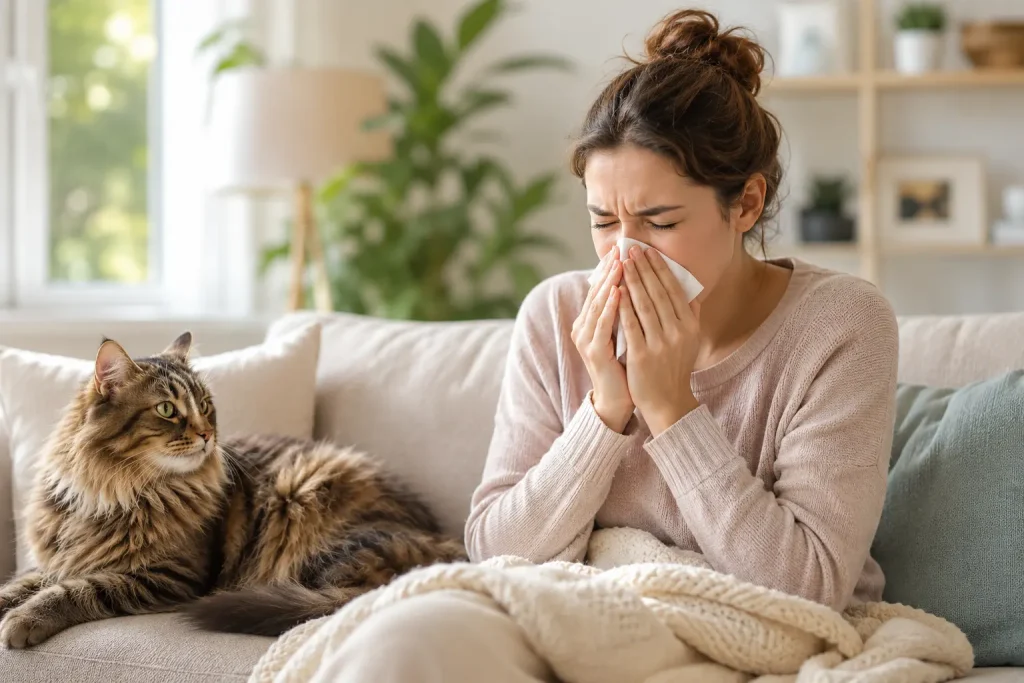
Adult-onset cat allergies occur when the immune system develops a hypersensitive response to proteins found in cat dander, saliva, and skin secretions. The primary allergen responsible is Fel d 1, a small airborne protein that easily spreads throughout indoor environments.
Unlike immediate allergic reactions seen in childhood, adult-onset allergies often develop gradually due to cumulative exposure and immune sensitization over time.
Immunological Mechanism
Allergic reactions occur when the immune system mistakenly identifies harmless proteins as threats. In cat allergies, this involves the production of Immunoglobulin E (IgE) antibodies targeting cat allergens.
Upon repeated exposure:
- The immune system becomes sensitized
- IgE antibodies bind to mast cells
- Subsequent exposure triggers histamine release
- Symptoms such as sneezing, congestion, and eye irritation appear
This process is not a sudden immune “change,” but a gradual shift in immune tolerance.
Fel d 1: The Primary Cat Allergen
Fel d 1 is the dominant allergen responsible for most cat-related allergic reactions.
Key characteristics:
- Extremely lightweight and airborne
- Easily attaches to clothing, furniture, and surfaces
- Remains active for hours in indoor environments
- Produced primarily in cat saliva and sebaceous glands
Because cats groom themselves frequently, Fel d 1 spreads continuously into the environment, making complete avoidance difficult even in clean homes.
Why You Suddenly Developed a Cat Allergy
Many individuals report sudden symptoms after years of exposure. Several mechanisms may explain this phenomenon:
1. Cumulative Sensitization
Repeated low-level exposure over time can eventually cross a biological threshold, triggering immune recognition.
2. Environmental Changes
Changes in indoor air quality, humidity, or ventilation can increase allergen concentration.
3. Hormonal and Immune Regulation Changes
Adult immune responses can shift due to:
- Aging
- Hormonal fluctuations
- Chronic stress
- Sleep disruption
4. Cross-Reactivity
Some individuals develop sensitization due to exposure to similar proteins in other allergens, such as dust mites or animal dander.
5. Increased Indoor Exposure
Spending more time indoors (remote work lifestyle) increases allergen exposure frequency.
Symptoms of Adult-Onset Cat Allergies
Symptoms vary in severity depending on sensitivity and exposure levels.
Common symptoms include:
- Sneezing and nasal congestion
- Runny nose (allergic rhinitis)
- Itchy or watery eyes
- Coughing or throat irritation
- Wheezing in severe cases
- Skin irritation or eczema flare-ups
In more severe cases, exposure may trigger asthma-like symptoms, especially in individuals with pre-existing respiratory conditions.
Distinguishing Cat Allergies from Other Triggers
Not all allergic symptoms associated with cats are caused directly by cats themselves. Misdiagnosis is common.
Other possible triggers include:
- Dust mites in bedding or upholstery
- Mold spores in indoor environments
- Pollen brought in from outdoors
- Secondary cat allergens (Fel d 2, Fel d 4)
Accurate Diagnosis Methods
Reliable diagnostic approaches include:
- Skin prick testing (SPT)
- Serum-specific IgE blood tests
- Controlled exposure elimination trials
Accurate diagnosis is essential before implementing long-term management strategies.
How to Diagnose Cat Allergies Accurately
Diagnosis should ideally be conducted by an allergist or immunologist.
Common clinical steps:
- Medical history review (symptoms and exposure patterns)
- Skin prick testing for common allergens
- Blood testing for IgE antibodies
- Environmental assessment of home exposure
This process helps differentiate cat allergy from similar respiratory or dermatological conditions.
Evidence-Based Management Strategies
While complete elimination of allergens is ideal, it is not always realistic for cat owners. Management typically involves a multi-layered approach.
Tier 1: Allergen Source Reduction
These methods aim to reduce Fel d 1 concentration in the environment:
- Regular grooming or brushing of cats
- Weekly or biweekly bathing (if tolerated)
- Use of HEPA air purifiers
- Keeping cats out of bedrooms
- Frequent vacuuming with HEPA filters
- Washing bedding in hot water
Air purification is particularly effective in reducing airborne allergen load.
Tier 2: Pharmacological Management
Medications help control immune response and reduce symptoms:
- Antihistamines (e.g., cetirizine, loratadine)
- Nasal corticosteroid sprays
- Leukotriene receptor antagonists (e.g., montelukast)
- Antihistamine eye drops
These treatments do not eliminate the allergy but significantly reduce symptom severity.
Tier 3: Allergen Immunotherapy
Immunotherapy is the only disease-modifying treatment option.
Two main types:
- Subcutaneous immunotherapy (SCIT) – allergy shots
- Sublingual immunotherapy (SLIT) – oral drops or tablets
Over time, immunotherapy can:
- Reduce immune sensitivity
- Decrease symptom severity
- Improve long-term tolerance
Treatment typically requires 3–5 years for sustained effects.
Hypoallergenic Cats: Myth vs Reality
Despite marketing claims, there is no truly hypoallergenic cat breed.
Key scientific facts:
- All cats produce Fel d 1
- Levels vary between individuals, not breeds
- Male cats may produce slightly higher allergen levels than females
Therefore, adopting a “hypoallergenic breed” does not guarantee symptom prevention.
Living With Cats Despite Allergies
Many individuals successfully manage cat allergies without rehoming their pets.
Practical strategies include:
- Creating allergen-free zones (bedrooms)
- Using HEPA filtration systems continuously
- Wearing masks during cleaning or grooming
- Washing hands after contact with cats
- Minimizing fabric surfaces where allergens accumulate
Consistency is more important than intensity in allergen control.
Frequently Asked Questions
Can adult-onset cat allergies go away?
In some cases, symptoms may decrease with reduced exposure or immunotherapy, but spontaneous resolution is uncommon.
Why am I suddenly allergic to my cat after years?
This is typically due to cumulative sensitization or changes in immune regulation rather than a sudden immune shift.
Are cat allergies dangerous?
Most cases are mild, but severe allergies can trigger asthma symptoms requiring medical management.
Do air purifiers help with cat allergies?
Yes. HEPA filters significantly reduce airborne Fel d 1 concentrations, improving symptom control.
Is rehoming the cat necessary?
Not always. Many cases are manageable with environmental and medical strategies.
Conclusion
Adult-onset cat allergies are a result of complex immune sensitization processes rather than sudden biological changes. While symptoms can be disruptive, modern allergy management strategies—including environmental control, pharmacological treatment, and immunotherapy—make it possible for many individuals to continue living with their cats comfortably.
Understanding the underlying mechanisms and applying a structured management plan is the most effective approach to long-term control.