
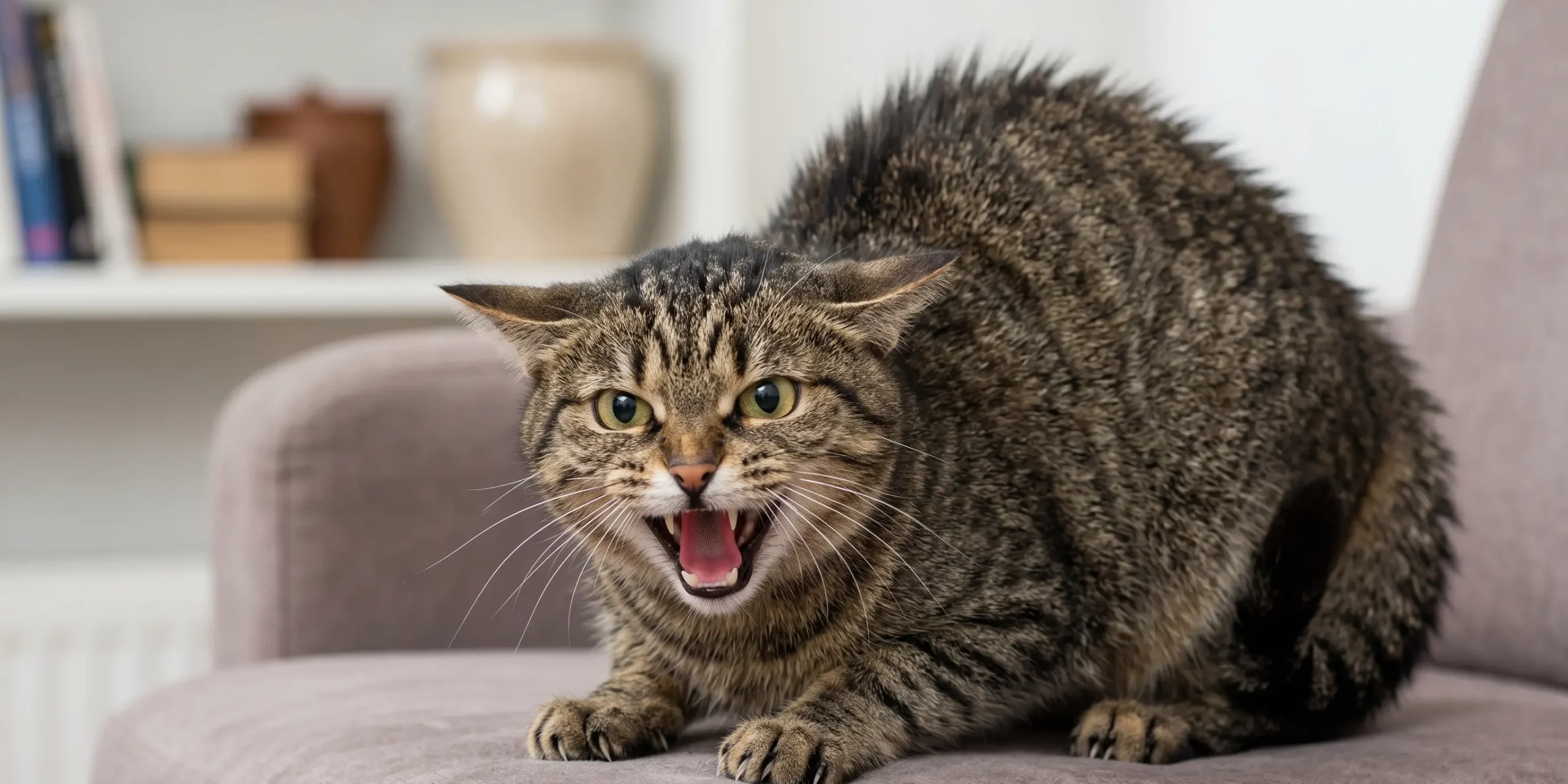
Why Is My Cat Suddenly Aggressive? Causes, Warning Signs, and Solutions
Sudden aggression in a previously calm cat is alarming — but it is rarely random. Understanding the seven most common causes is the fastest route to the right solution.
A cat that becomes aggressive suddenly, without obvious provocation, is almost always responding to a specific internal or external trigger — such as physiological pain, a perceived threat it cannot reach, or an acute neurological change. Clinical research published in the Journal of Veterinary Behavior confirms that physical pain is the primary or contributing cause in a significant proportion of feline behavior cases.[1] Ruling out underlying medical conditions is therefore a mandatory first step before attempting any behavioral modifications.
The seven causes of sudden aggression in cats
Aggression in felines is not a diagnosis in itself, but rather a clinical symptom of an underlying issue. The seven categories outlined below cover the vast majority of cases seen by veterinary behaviorists. Correctly identifying which driver is at play dictates the correct course of action.
1. Pain or physical illness
Any condition that causes chronic or acute pain can trigger sudden, defensive behaviors. Dental disease, osteoarthritis, hyperthyroidism, urinary tract infections (UTIs), and neurological disorders are common triggers. A study by Camps et al. highlighted that cats suffering from musculoskeletal pain frequently direct localized aggression toward the source of touch, serving as a key diagnostic indicator for veterinarians.[3]
If your cat’s behavior changes rapidly over a span of weeks, pay close attention to shifts in appetite, mobility, grooming habits, or litter box usage. Seek a thorough veterinary exam immediately. Trying to resolve pain-related behavior using training alone will fail and inevitably compound your pet’s distress.
2. Redirected aggression
Redirected aggression is one of the most common and misunderstood feline behavioral issues. It occurs when a cat becomes highly aroused by a stimulus it cannot physically reach—such as an outdoor cat visible through a window, a sudden loud sound, or unfamiliar scents on clothing—and subsequently turns its frustration onto the nearest moving target, which is often the owner. Because the owner was uninvolved in the initial trigger, the attack appears to happen without warning.
Redirected aggression episodes can keep a cat’s nervous system in a state of high arousal for hours or even days after the trigger is gone. During this period, any minor stimulus can re-trigger an attack. Give the cat complete quiet, isolate them in a comfortable room, and avoid all contact until they return to baseline.
3. Fear-based aggression
When a cat feels trapped, cornered, or excessively restrained, it will resort to defensive aggression as a last resort. Fear-based aggression is rarely random; it is almost always preceded by subtle warning signs—such as dilated pupils, flattened ears (airplane ears), tail twitching, and a low, tensed posture. If these warnings are ignored or escape routes are blocked, the cat will strike.
4. Inter-cat aggression in multi-cat households
A large-scale analysis of behavior diagnoses published in the Journal of the American Veterinary Medical Association confirmed that inter-cat conflict is the second most common presenting complaint at behavioral clinics.[2] Sudden tension between resident cats often stems from redirected aggression, a change in scent (such as one cat returning from a vet visit), or resource competition over food, water, litter boxes, and territory.
5. Over-stimulation (petting-induced aggression)
Many cats have a strict limit for tactile stimulation. Once this threshold is crossed, they may suddenly bite or scratch. This is not a random attack, but a breakdown in communication. Owners should watch for early signs of over-stimulation, including skin twitching along the spine, a swishing tail, shifting ears, and a head turn toward the handling hand.
6. Maternal aggression
Nesting queens will naturally defend their kittens from any perceived threats, including trusted owners. This is an instinctual behavior that typically resolves as the kittens are weaned. Give the mother space and avoid handling the litter unless necessary.
7. Play-related aggression
Adolescent cats (under two years old) frequently display behaviors like stalking, ankle-biting, and pouncing. While it can feel aggressive, this is actually a misplaced predatory play drive. These cats require structured daily play sessions with interactive toys to satisfy their instincts safely.
How pain causes sudden aggression: what to look for
Unlike fear or territorial aggression, pain-induced behavior has specific characteristics. Look for reactions triggered by touching specific parts of the body, a sudden onset without environmental changes, a stiff gait, reluctance to jump, or a decrease in grooming. In older cats, hyperthyroidism is a frequent driver of behavioral changes and sudden irritability, which can easily be misdiagnosed as “old age personality shifts” but is entirely treatable.
Before visiting your veterinarian, keep a brief log noting when aggressive incidents occur, what immediately preceded them (such as petting, a sudden movement, or a loud noise), and the specific areas of the body your cat guarded. This behavioral history is highly valuable for diagnostics.
Redirected aggression: the full picture
Redirected aggression is particularly distressing because it can severely damage the bond between you and your pet. A typical scenario involves a cat spotting a neighborhood feline through a window, becoming highly agitated, and then attacking an owner who walks into the room.
Resolving redirected aggression requires a three-step approach: eliminate the trigger (using frosted window films or moving bird feeders), allow a complete cool-down period of 24 to 48 hours without contact, and execute a gradual reintroduction using high-value treats to build positive associations at a safe distance.
Fear and over-stimulation aggression
The most effective way to address fear-based reactions is to remove the fearful stimulus and provide the cat with elevated, secure hiding spots. For petting-induced aggression, success lies in learning your cat’s specific touch limits and stopping contact before they react. Never punish a cat after a bite; felines do not connect physical punishment to their previous actions, and yelling or hitting will only increase their fear and elevate their aggressive response.
How to respond when your cat attacks without warning
Take the following immediate actions if an aggressive incident occurs:
- Provide immediate space. Do not chase, corner, or comfort the cat. Back away slowly, avoid direct eye contact (which is perceived as a threat), and leave the room to allow their adrenaline levels to drop.
- Identify potential triggers. Scan the environment immediately. Check the windows for stray cats, listen for construction noises, or check for new, unfamiliar smells.
- Look for signs of physical discomfort. Note if the reaction occurred when a specific body area was touched. Observe their movement, posture, and resting habits from a safe distance.
- Allow a low-stimulation cool-down. Isolate the cat in a quiet room with food, water, and a litter box for 24 to 48 hours. Keep household noise and traffic to a minimum.
- Consult your veterinarian. If this is a new behavior or the intensity of the aggression has increased, schedule a clinical checkup to identify any underlying pain or illness.
When to seek professional help
Consult a certified veterinary behaviorist if: the aggression has resulted in human injury, the frequency or severity of the behavior is rising, inter-cat conflict has lasted more than two weeks, or standard environmental enrichment has failed to produce results after a month.
Cat bites carry a high risk of bacterial infection. Puncture wounds from a cat should be washed immediately with soap and water, and medical attention should be sought on the same day.
Frequently asked questions
Why is my cat suddenly aggressive towards me?
Sudden aggression towards a familiar person is most commonly caused by pain, redirected aggression from an external trigger (such as a stray cat visible through a window), or a medical condition affecting the nervous system. A veterinary examination is the essential first step to rule out physical causes before addressing behavior.
Can sudden aggression in cats be cured?
In most cases, yes. When the underlying cause is identified and treated, aggression resolves or reduces significantly. Medical causes require veterinary treatment. Behavior-based causes respond well to structured desensitisation, environmental modification, and pheromone support.
Should I punish my cat for sudden aggression?
No. Punishment — including spraying with water, shouting, or physical correction — increases fear and anxiety in cats, which almost always worsens aggression. The correct response is to remove the trigger, give the cat space, and consult a veterinarian or certified behaviourist.
How quickly does sudden cat aggression develop?
Redirected aggression can appear with no warning in an otherwise calm cat. Fear-based and pain-based aggression often escalate over days or weeks before the owner notices. If the aggression appeared completely without prior behavioural changes, medical investigation is the priority.