Cat Destructive Behavior: Why Cats Scratch, Chew & Destroy (And How to Stop It)
Shredded sofas, gnawed sweaters, ravaged houseplants — destructive behavior in cats is rarely about revenge. Stress and unmet instinctual needs are almost always the real culprit.
Why Cats Behave Destructively
Discovering a shredded armchair, a chewed cardigan, or a toppled, half-eaten monstera when returning home is a common pain point for cat owners. However, it is crucial to recognize that your cat is not acting out of malice or revenge. In felines, destructive behaviors are overwhelmingly rooted in deep instinct, boredom, or underlying anxiety.
Research published in Applied Animal Behaviour Science demonstrates that cat owners frequently misinterpret problematic behaviors as deliberate retaliation. In reality, scratching, chewing, and plant-eating are entirely natural feline activities that have simply been redirected onto inappropriate household targets.
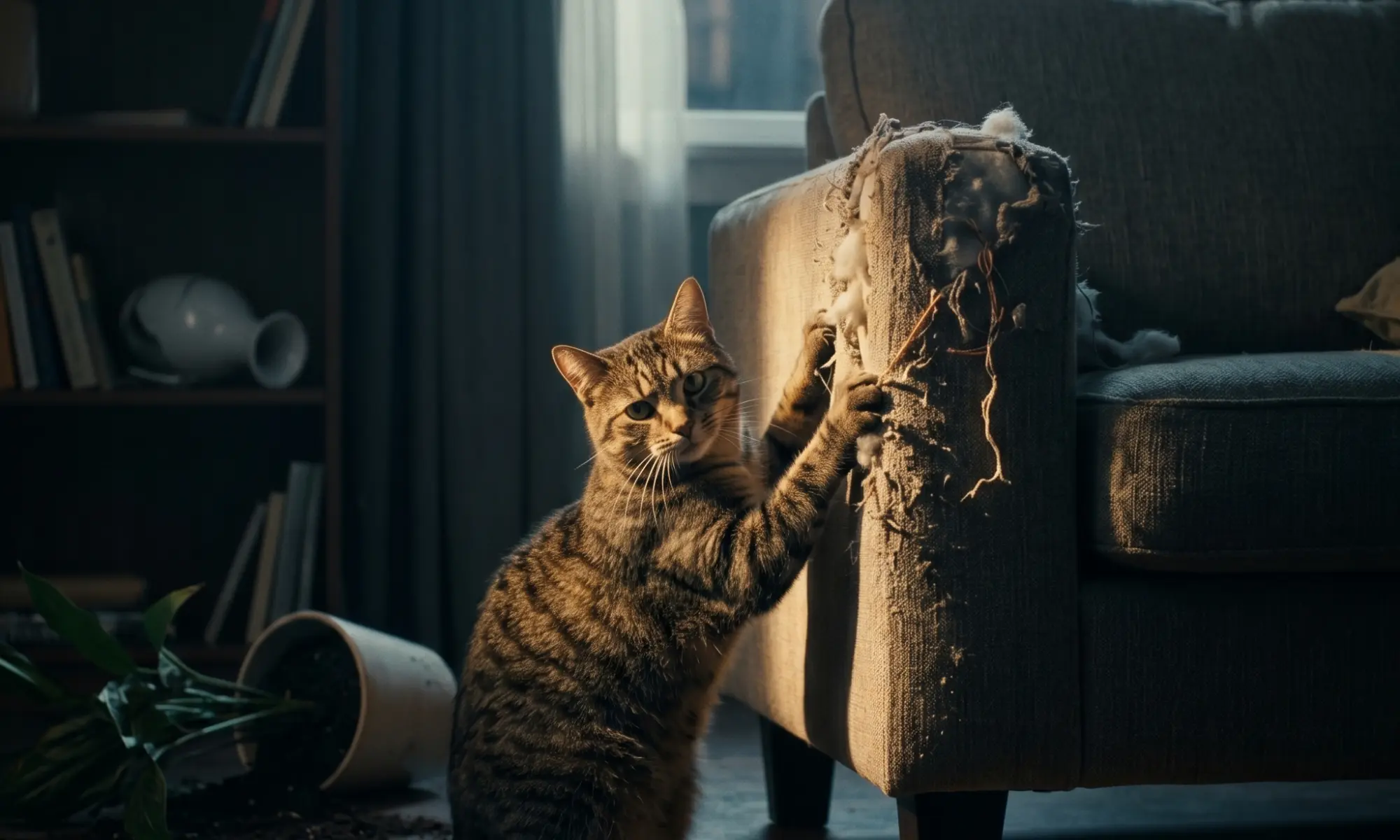
The distinction between “normal scratching” and “destructive scratching” is entirely a human one. From your cat’s perspective, the arm of your sofa is simply a highly functional substrate for instinctual grooming and marking. Understanding this behavioral reframe is the first step toward correcting the problem.
Importantly, stress and anxiety function as powerful behavioral amplifiers. A 2024 study published in Frontiers in Veterinary Science discovered that undesired scratching behaviors in domestic cats correlate significantly with elevated cortisol levels, household stress, and social tension. When baseline anxiety rises, cats express these instinctual behaviors with increased intensity and frequency.
The three most common destructive behaviors owners encounter are furniture scratching, fabric chewing (including wool sucking), and houseplant consumption. Each behavior carries a distinct motivational profile and responds to targeted environmental modifications.
Furniture Scratching: The Stress-Marking Connection
Scratching is a fundamental physiological and social need for cats. It serves three critical purposes: depositing territorial scent messages from glands in the paw pads, shedding the dead outer husks of their claws to maintain optimal health, and providing a full-body stretch that tones their muscular system.
Because scratching functions as a primary territory-marking behavior, it escalates when a cat feels insecure or socially threatened. A cat that previously used its scratching post consistently may suddenly target your furniture following the introduction of a new pet, a relocation, or changes in household routines. The targeted furniture is used as a canvas to re-establish territorial reassurance.
Indeed, research published in the Journal of Feline Medicine and Surgery indicates that approximately 71% of owners report unwanted scratching on furniture, making it the most common behavioral complaint in domestic environments.
Identifying Your Cat’s Scratching Preferences
Successful redirection relies on matching your cat’s specific preferences rather than forcing them to adapt to a generic post. Observe their habits:
- Substrate Preference: Note what they target. Upholstered fabrics, vertical carpet fibers, raw wood, or flat cardboard each point toward a specific post material.
- Orientation: Observe whether they stretch vertically overhead to scratch (requiring a tall, sturdy post) or prefer to scratch horizontally along carpets (requiring low cardboard pads or mats).
- Location: Place scratching surfaces in socially significant zones. Post placement near favorite sleeping areas, doorways, or next to the targeted furniture is far more effective than tucking them in quiet corners.
Redirecting the Scratching Habit
Place a preferred post directly in front of the targeted furniture, encouraging use with catnip or treats. Once the post is established as a preferred scratching site, you can migrate it gradually—a few inches a day—to a more convenient location. Do not discard a worn-out, ragged post; its heavily marked appearance and scent profile reassure your cat that it is a valid territory marker.
To deter them from the furniture during training, cover the targeted areas with double-sided tape, heavy foil, or plastic sheets. Cats dislike these textures on their paws. Additionally, use an enzymatic odor neutralizer on scratched furniture to remove the scent markers that invite repeat scratching.
Fabric Chewing and Wool Sucking
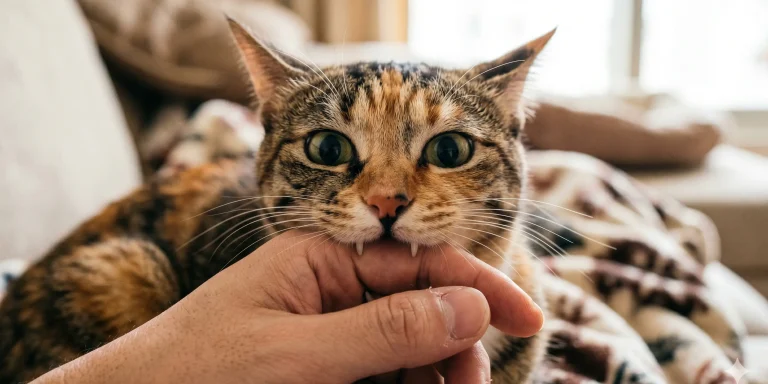
Fabric chewing is less common than scratching but harder to resolve, as it often develops as a compulsive, self-soothing response to anxiety. Wool sucking—prevalent in Siamese, Burmese, and other Oriental breeds—points to a genetic predisposition toward repetitive behavioral loops.
This behavior typically starts in kittenhood as oral exploration and can solidify into a compulsive coping mechanism in adult life. Cardigans, socks, wool blankets, and pillows are typical targets. Anxious cats may also target high-risk materials like electrical cords, plastic wraps, and twist ties.
Ingesting non-food materials (pica) can lead to life-threatening gastrointestinal blockages. If your cat swallows threads, fibers, or fabric pieces, seek immediate veterinary attention. Diagnostic imaging is often required to rule out physical obstructions.
Managing Fabric-Chewing Behavior
The most reliable defense is strict environmental management: store all target fabrics securely in closets or drawers. Provide safe, durable oral alternatives—such as rubber dental toys or dried cat grass—to satisfy their chewing drive safely.
Chewing driven by understimulation responds well to structured environmental enrichment. Provide vertical trees, interactive puzzle feeders, and two daily 15-minute interactive play sessions using wand toys to satisfy their predatory drive.
For persistent habits, apply non-toxic, bitter-tasting sprays to targeted fabrics. In severe cases of compulsive chewing or pica, consult a veterinary behaviorist to evaluate whether prescription anxiolytic medications are needed to lower their compulsive drive.
Houseplant Chewing: Risks and Safer Alternatives
Indoor cats naturally seek out vegetation to assist with digestion, obtain dietary fiber, or explore interesting textures. While usually opportunistic, plant chewing carries severe risks because many common house plants are highly toxic to felines.
| Plant | Latin Name | Toxicity Level & Effect |
|---|---|---|
| Lilies (all species) | Lilium spp. | Severe — can cause fatal acute kidney failure |
| English Ivy | Hedera helix | Moderate — gastrointestinal distress, neurological signs |
| Philodendron | Philodendron spp. | Moderate — severe oral pain, excessive drooling |
| Oleander | Nerium oleander | Severe — fatal cardiac glycoside toxicity |
| Dumb Cane | Dieffenbachia spp. | Moderate — intense swelling of mouth and throat |
| Poinsettia | Euphorbia pulcherrima | Mild to moderate — irritation to digestive tract |
| Mistletoe | Phoradendron spp. | Moderate — gastrointestinal and cardiovascular distress |
| Caladium | Caladium spp. | Moderate — swelling, oral pain, and vomiting |
Note: This table lists only a selection of common toxic plants. Always verify the safety of any plant with your veterinarian or the ASPCA Poison Control database before bringing it into your home.
Providing Safe Alternatives
The safest approach is to remove all toxic plants and introduce cat-friendly greenery. Planters of fresh oat grass, wheatgrass, or catnip provide safe, attractive grazing options that satisfy your cat’s natural craving for fiber.
To protect safe ornamental plants, spray leaves with pet-safe bitter deterrents, or place physical barriers like motion-activated air puffers around the pots to keep curious cats at a distance.
Why Punishment Makes Destructive Behavior Worse
Yelling, clapping, or using water spray bottles when catching a cat in the act of chewing or scratching are common reactions. However, behavioral science confirms these methods are highly counterproductive.
Cats do not associate the punishment with their scratching or chewing behavior. Instead, they associate the frightening stimulus directly with you. They learn that you are unpredictable and dangerous, prompting them to continue the destructive behaviors only when you are out of the room.
Furthermore, physical corrections or sudden startles elevate cortisol levels and increase the baseline anxiety that drives destructive behavior in the first place. This creates a self-reinforcing stress loop: punishment leads to higher anxiety, which leads to more destructive behaviors.
Effective deterrents must be environmental and consistent. Using double-sided tape or motion sensors teaches the cat that the object itself is unpleasant to interact with, preserving your bond with your pet.
Addressing the Root Cause: Stress and Anxiety in Cats
Deterrents and redirection options work best when paired with strategies that address the underlying stress driving the behaviors. A cat that feels safe and has its instinctual needs met is far less motivated to scratch furniture or chew fabric to relieve tension.
Environmental Enrichment
Provide a stimulating environment that allows your cat to express natural behaviors safely:
- Vertical Space: Install cat trees or wall perches to allow elevated observation and secure retreats.
- Safe Havens: Ensure there is at least one quiet, covered hiding spot per cat in the household.
- Predatory Play: Engage in structured daily play sessions with wand toys, allowing the cat to complete the natural hunt-catch-eat cycle.
- Foraging Opportunities: Use food puzzles to turn mealtime into a stimulating mental challenge.
The Role of Feline Pheromones
Synthetic facial pheromones mimic the natural calming chemicals cats release when rubbing their faces against objects in their territory. Diffusing these pheromones in areas where scratching or chewing is concentrated helps lower baseline anxiety and reduce stress-induced marking.
When to Consult a Veterinarian
If your cat’s destructive behaviors start suddenly, are unusually intense, or are accompanied by changes in sleep, grooming, or eating habits, seek a veterinary exam. Underlying pain, metabolic issues, or age-related cognitive decline can trigger behavioral changes. A certified behaviorist can help design a custom modification plan for complex cases.
Frequently Asked Questions
Why is my cat suddenly destroying things?
Sudden destructive behavior in cats is often triggered by a change in environment, household routine, or an increase in stress. New pets, rearranged furniture, a change in working hours, or even a new smell in the home can elevate a cat’s anxiety and intensify scratching, chewing, or plant-eating. If the behavior appeared abruptly, scan for recent changes and consult a vet to rule out a medical cause.
Is cat scratching furniture a sign of stress?
Yes. While scratching is a normal feline behavior used for claw maintenance and scent marking, research shows that elevated scratching — particularly on furniture — increases significantly when cats feel anxious or socially threatened. It functions partly as a stress-relief mechanism and a form of territorial reassurance, so intensified scratching is a meaningful signal that something in the cat’s environment may need attention.
How do I stop my cat from chewing on fabric?
Restrict access to the items being targeted, offer cat-safe chew alternatives (rubber toys, dental chews, or dedicated fabric scraps they are allowed), increase environmental enrichment with play and climbing structures, and address the underlying anxiety. Fabric chewing — especially wool sucking — is often a self-soothing behavior in anxious or understimulated cats. Persistent cases may benefit from a vet assessment.
Can cat pheromones help with destructive behavior?
Yes. Synthetic feline facial pheromones have been shown to reduce stress-related marking and scratching behaviors. They work best as part of a broader strategy that includes environmental enrichment and redirection, but for many cats they meaningfully lower baseline anxiety and reduce the intensity of destructive behaviors. The Reliviax non-electric gel diffuser delivers calming pheromones continuously without requiring electricity or heat.
Are houseplants dangerous for cats?
Many common houseplants are toxic to cats, including all lily species (which can cause fatal kidney failure), English ivy, philodendron, oleander, and dumb cane. If your cat chews on plants, remove all toxic varieties immediately and replace them with cat-safe alternatives like oat grass, catmint, or catnip. Consult the ASPCA Animal Poison Control Center or your vet for a full toxic plant list.
Should I declaw my cat to stop scratching?
Declawing — which involves amputating the last bone of each toe, not just the nail — is considered an ethically controversial procedure by most veterinary bodies and is illegal in many countries. It carries surgical risks, can cause chronic pain, and does not address the underlying motivation to scratch. It should be considered only as an absolute last resort and only after thorough consultation with a veterinarian. Environmental management, redirection, nail caps, and stress reduction address the problem without surgical intervention.
The Bottom Line
Destructive behavior in cats is rarely a behavioral defect. Instead, it represents normal feline instincts expressing themselves in ways that conflict with domestic upholstery. The most effective approach is to satisfy their instinctual needs safely while lowering the baseline anxiety that drives these behaviors.
If stress is at the root of your cat’s destructive behavior, managing that stress directly will produce more durable results than using deterrents alone. Combining environmental enrichment, stable daily routines, and veterinary-approved calming solutions provides a holistic approach to restore peace in your home.