The Essential Pre-Adoption Blueprint: Navigating the First 365 Days of Cat Ownership
Adopting a cat is one of the most rewarding decisions you can make — but it comes with far more nuance than the “low-maintenance” reputation suggests. Whether you’re welcoming a wide-eyed kitten or a calm adult rescue, your first year sets the behavioral, nutritional, and emotional foundation for the entire relationship. This guide distills the clinical and practical knowledge every new cat owner needs, covering everything from kitten-proofing and crepuscular sleep cycles to scratching behavior, feeding schedules, and the real cost of feline ownership.
Two priorities stand above all others in the first weeks: understanding your cat’s crepuscular biology (peak activity at dawn and dusk) and kitten-proofing your home before your new companion arrives. Everything else flows from these two foundations.
1. Feline Energy, Enrichment, and Realistic Expectations
Cats are not passive pets. Their biology is wired for predatory movement, problem-solving, and social engagement. When those needs go unmet, destructive behavior fills the gap — and your curtains, ankles, and upholstery pay the price.
Single Kitten vs. Bonded Pair
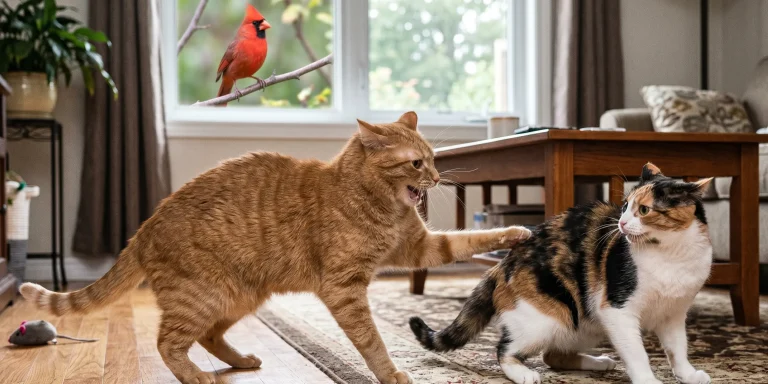
The energy dynamic shifts significantly based on how many cats you adopt. A single kitten relies entirely on you for all social and physical stimulation, which means a high daily workload. A bonded pair, while seemingly more effort, often reduces the burden: the kittens play-fight, teach each other social boundaries, and regulate each other’s energy throughout the day.
You are the sole source of stimulation. Schedule multiple 15-minute interactive play sessions per day to meet their needs.
Kittens entertain each other, reducing your workload while supporting better social development and emotional regulation.
Enrichment Strategies That Actually Work
- Toy rotation: Cycle toys in and out of play to prevent “prey boredom.” Cats habituate quickly to static stimuli.
- Free enrichment: A crumpled piece of paper or an empty cardboard box is equally effective as any high-end gadget — the value is in the movement and the bond, not the price tag.
- Catnip and varied textures: Introduce sensory variety to keep their indoor world engaging.
- Scheduled sessions: For single kittens, aim for at least two 15-minute interactive play sessions daily.
Enrichment does not require expensive equipment. Consistent human interaction paired with varied, rotating stimuli is the gold standard for a happy indoor cat.
2. How to Kitten-Proof Your Home: A Room-by-Room Checklist
Kitten-proofing is not optional — it is a form of risk management that prevents traumatic accidents and costly emergency vet visits. Kittens are biologically driven to explore every concealed space, and they can disappear into gaps behind appliances in an instant.
- Check your dryer and fridge before closing them. Kittens are drawn to warmth and smells.
- Install baby-proof locks on lower cabinets containing cleaning supplies or medications.
- Screen your fireplace securely during cooler months.
- Use a collar with a bell so you can track movement and prevent sudden disappearances behind appliances.
- Audit your houseplants. Poinsettias, lilies, and many other common plants are toxic or fatal to cats. Rehome them before adoption.
- Protect electrical cords. Between 4–6 months, kittens teethe and will chew anything. Use cord protectors or route cables out of reach.
- Never assume a plant is safe — verify every species against the ASPCA toxic plant database.
- Never leave a kitten unsupervised in a room with uncovered electrical cables during the teething window (4–6 months).
- Never use essential oil diffusers near cats — many oils are toxic through inhalation.
3. Understanding Your Cat’s Crepuscular Biology (and Ending 5 AM Wake-Ups)
The term crepuscular describes animals biologically primed for peak activity at dawn and dusk. This is not a behavior problem — it is your cat’s evolutionary inheritance from wild ancestors whose prey was most active at twilight.
“If you feed your cat at 6:00 AM during the work week, they will demand that same meal on Saturday. Cats do not observe the weekend. Choose a schedule you can commit to 365 days a year.”— Clinical Feline Behavior Guidance
The Evening Exhaustion Plan
To minimize nighttime disruptions and early-morning wake-up calls, implement this three-step routine every evening:
- High-intensity play session immediately before your own bedtime — wand toys, chase games, anything that gets your cat running.
- Small meal immediately after play to simulate the hunt → eat → groom → sleep cycle.
- Consistent timing every night — cats internalize routines quickly, and consistency is the whole mechanism.
The Bedroom Door Dilemma
Locking a solitary cat out of the bedroom often backfires. Cats driven by social need may vocalize persistently outside the door. If a closed-door policy is necessary, establish it from day one rather than introducing it after a period of access. A bonded companion cat can significantly reduce this separation-driven behavior.
4. Scratching, Biting, and Behavioral Boundaries
Scratching is not destructive — it is a mandatory health behavior. Cats scratch to shed claw sheaths, stretch core muscles, and deposit scent from glands in their paws. The goal is not elimination; it is redirection.
Scratching Post Strategy
Use the N+1 formula: one post per cat, plus one extra. Two cats = three posts, minimum. Posts should be:
- Tall enough for a full vertical stretch (at least 28–32 inches)
- Stable enough that they do not wobble when used
- Positioned near sleeping areas and favorite furniture — not hidden in a corner
Apply aluminum foil or bitter-tasting deterrent spray to surfaces you want to protect. Cats dislike both the texture and the scent, which encourages redirection to appropriate posts.
Hands Are Not Toys: A Non-Negotiable Rule
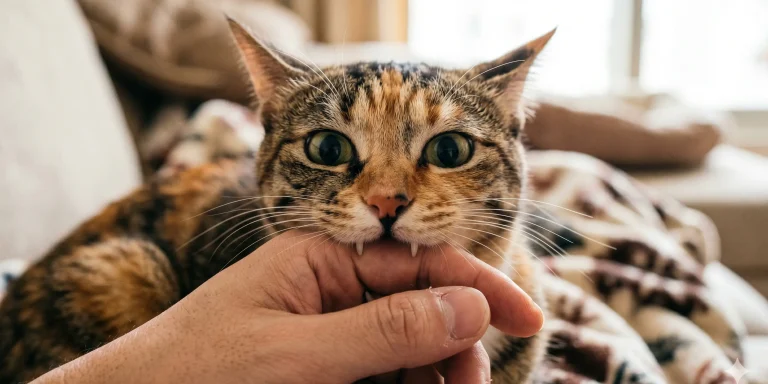
Allowing a kitten to play-bite your hands feels harmless — until it isn’t. Every time you permit skin contact during play, you reinforce the association that human flesh is a legitimate target. Always use a toy to redirect biting. Establish this boundary from day one and it will hold for life.
Nail Care: Desensitization from Day One
- Massage paws and ears during calm, relaxed moments — not during play.
- Pair touching with treats so the cat forms a positive association with handling.
- Begin bi-weekly nail trims as early as possible. Familiarity makes this a five-minute task rather than a two-person ordeal.
5. Nutrition, Hydration, and the True Cost of the First Year
Strategic financial planning is as important as behavioral preparation. The first year involves several one-time setup costs on top of ongoing monthly expenses.
Wet Food vs. Dry Food: The Hydration Case
Cats evolved in arid environments and have a naturally low thirst drive. Unlike dogs, they do not compensate adequately for dry food’s low moisture content. A diet based primarily on dry kibble is clinically associated with chronic dehydration, which is a leading contributor to kidney disease and urinary tract problems in middle-aged cats. Wet food provides the moisture content their systems expect.
| Category | Details | Est. Monthly Cost |
|---|---|---|
| Veterinary Care | Exams, core vaccines, spay/neuter, wellness plan | ~$85 |
| Wet Food (primary diet) | Moisture-rich food supporting kidney health | $40–$70 |
| Litter & Supplies | Natural litter (e.g., pine) bought in bulk is most cost-effective | $20–$30 |
| Enrichment | Scratching posts, rotating toys, interactive tools | $10–$20 |
The ASPCA estimates average cat ownership costs around $53 per month for routine expenses — though first-year owners typically spend more due to setup costs averaging around $365. Budget conservatively and consider a pet wellness plan to spread veterinary costs.
6. Indoor vs. Outdoor: The Evidence-Based Case for Keeping Cats Inside
The indoor/outdoor debate has a clear clinical answer. The risks of outdoor access are constant, compounding, and disproportionate to the benefits — even in quiet suburban or rural areas.
Hawks, coyotes, and raccoons are present in suburban areas across North America. Even a brief excursion into a yard creates exposure.
A cat that eats a rodent that consumed rat poison ingests that poison too. This is a frequent and severe clinical risk in both urban and suburban environments.
Free-roaming outdoor cats have a measurable impact on local bird and small mammal populations — a concern for ecologically minded owners.
A catio (outdoor enclosure) or leash training provides enriching fresh-air access without exposure to traffic, predators, or poison.
Frequently Asked Questions
Cats are crepuscular — biologically wired for peak activity at dawn and dusk. To curb early-morning disruptions, implement the Evening Exhaustion Plan: a high-intensity play session immediately before your bedtime, followed by a small meal. This mimics the natural hunt → eat → sleep sequence and significantly reduces 5 AM wake-up calls.
The intense chewing phase typically ends once the teething window closes, usually between 4 and 6 months of age. Until then, hide or protect all electrical cords. Once adult teeth are in, chewing behavior subsides substantially — though some cats retain cord-chewing habits if it was rewarded by attention early on.
Yes, for most cats. Because cats have a low innate thirst drive, wet food provides the moisture content their kidneys and urinary tract depend on. A diet built primarily on dry kibble is associated with chronic low-grade dehydration, which is a contributing factor in kidney disease — the leading health issue in cats over age 7. Wet food as the primary diet is the clinically preferred approach.
Follow the N+1 rule: one scratching post per cat in the household, plus one additional post. For a single cat, that means two posts. For two cats, three posts. Position them near sleeping areas and anywhere your cat has already shown interest in scratching — not tucked in a corner where they’re easy to ignore.
Veterinarians generally advise against unsupervised outdoor access even in quiet areas. Secondary poisoning from eating poisoned rodents, predation by hawks or coyotes, and vehicle encounters are risks that persist regardless of neighborhood traffic levels. A catio or supervised leash walks are the safest way to provide outdoor enrichment.