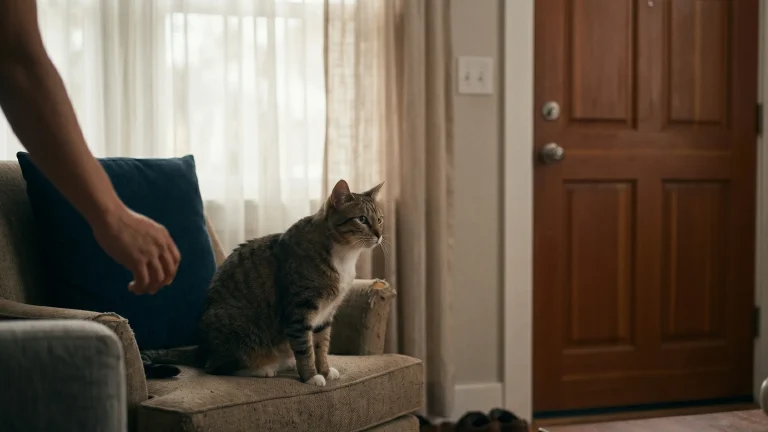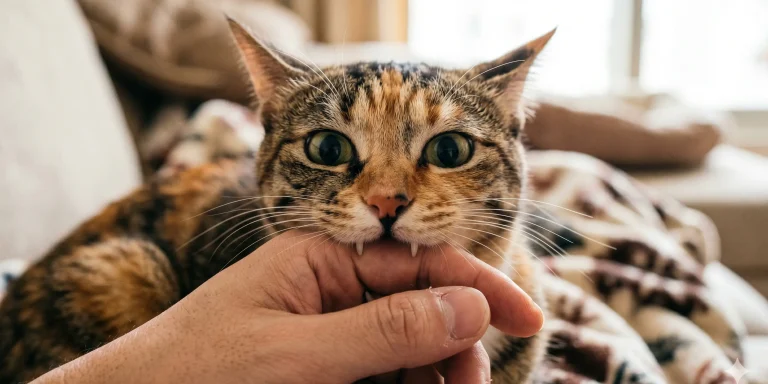
Can Your Cat Be “Evil”?The Truth Behind Feline Behavior and Media Sensationalism
A certified behaviorist dismantles viral “evil cat” science, exposes the Cat-Tri+ psychopathy questionnaire’s fundamental flaw, and shows why biological reality always beats moral projection.
No — cats cannot be evil. “Evil” requires moral intent, a capacity cats simply do not possess. Feline behaviors that humans label as antisocial, demanding, or spiteful are rooted entirely in biology, evolutionary drive, and territorial instinct — not malice. Understanding this distinction is the foundation of a healthy human-cat relationship.
Decoding the “Evil Cat” Narrative
To address the question directly: a cat cannot be evil. “Evil” is a uniquely human moral construct — a label we assign to intentional malice and a conscious desire to cause suffering. Cats do not possess the moral framework or cognitive architecture required to be “evil” or “good.” They operate purely on biological necessity, evolutionary drive, and survival.
As a behaviorist, distinguishing between genuine feline behavior and human moral labels is not just a scientific exercise — it is a strategic necessity. When we project human flaws like “spite” or “malice” onto our companions, we damage the human-animal bond, creating a rift of misunderstanding that leads to resentment, neglect, and abandonment.
We must transition from judging cats through the lens of human morality and start seeing them through the lens of behavioral science. A wave of sensationalist studies and irresponsible media reporting has fueled “evil cat” myths — and it’s time to separate facts from headlines.
Analyzing the Cat-Tri+ Study: Science vs. Human Projection
A study from the University of Liverpool, “A domestic cat model of triarchic psychopathy factors,” introduced the Cat-Tri+ questionnaire — ostensibly to measure psychopathy in cats. However, there is a fundamental flaw in how this data was presented: the study didn’t measure objective feline pathology. It measured human perception. The data came from 500 owners answering subjective questions about their pets.
| Human Psychopathy (Merriam-Webster) | Feline Biological Reality |
|---|---|
| Egocentric and antisocial activity | Solitary, territorial predator behavior |
| Lack of remorse | No evolutionary framework for social “rules” |
| Absence of empathy | Self-preservation as a survival imperative |
| “Disobeying house rules” | 100% normal, healthy feline independence |
“Applying a human psychological disorder to a species that is simply being itself is not just irresponsible — it is damaging.”Cat Mojo Behavioral Team — Cat Mojo
The study labels behaviors like “demanding attention,” “disobeying house rules,” and “lack of guilt” as markers of psychopathy. In reality, these are completely normal feline behaviors. Cats are not dogs; they do not share the same social hierarchy or the evolutionary drive to seek validation from a pack leader. This projection of human pathology onto animals sets the stage for the media to amplify dangerous misunderstandings.
Predators in the Living Room: Understanding Obligate Carnivore Reality
The biological imperatives of cats are dictated by their status as obligate carnivores: their survival depends entirely on meat-based proteins like taurine. When we ignore this, we mistake survival for cruelty.
Sensationalist outlets have published headlines like “Compelling new evidence that your cat might eat your corpse.” While designed to shock, the behavioral reality is simply a survival mechanism. If a cat is trapped without a food source, biology leaves it no choice. This is not malice or a lack of respect — it is a biological imperative. Dogs, as omnivores, exhibit identical survival behavior in the same circumstances.
Instinct, Not Intent
Malice requires conscious intent. Survival requires only instinct. Cats have the latter, never the former.
Play = Predation Practice
Kittens “attacking” littermates aren’t being mean — they’re developing predation skills essential for survival.
Biology Is Not Morality
Taurine dependency, hunt drive, and territorial marking are evolutionary — none carry moral weight.
The Parasite and the Press: Debunking the “Mind Control” Myth
The most pervasive example of clickbait science is the narrative surrounding Toxoplasma gondii. The press has used inflammatory phrases like “Crazy Cat Lady Syndrome” and “mind-control parasite” to generate clicks, creating lasting negative stereotypes that are incredibly difficult to erase.
- The famous “mind control” studies were conducted on mice and rats — not humans
- The press applied rodent findings to human behavioral quirks without scientific basis
- There is no evidence the parasite causes “craziness” in human cat owners
- The “Crazy Cat Lady” stereotype persists purely as a weapon against feline reputations
- This irresponsible reporting ignores scientific reality for the sake of ad revenue
The Toxoplasmosis media narrative is a textbook example of how species-specific findings get weaponized into cultural stereotypes — with real-world consequences for cat adoption rates and human-animal bonds.
The High Stakes: Why Negative Stereotypes Are Life-and-Death
The stakes of these narratives are literal life and death. Millions of cats worldwide die every year simply because they lack homes. When researchers and the media reinforce destructive labels, they directly reduce adoption rates. Labeling cats as “psychopaths” creates a real psychological barrier for potential adopters.
This bias is glaringly obvious when compared to other species. Media reports heavily on certain dog breeds to fuel “dangerous animal” narratives while ignoring that smaller breeds may bite more frequently. The difference is always the narrative — the headline defines the species, not the data.
Challenge the Narrative
Push back every time a sensationalist “evil cat” story appears in your feed. Silence is complicity.
Stop Sharing Clickbait
Every share of a sensationalist article amplifies harm. Share behavioral science instead.
Adopt, Don’t Avoid
An “antisocial” shelter cat is usually a stressed, misunderstood cat. Behavioral context changes everything.
Supporting Your Cat’s Well-being: The Behavioral Science Approach
A positive feline-human relationship is built on proactive health management. Often, the “demanding” or “antisocial” behaviors that researchers mislabel are outward signs of feline stress or environmental boredom. When a cat feels misunderstood in its own home, stress levels rise — leading to the very behaviors humans judge negatively.
| What Media Calls It | What It Actually Is | What Helps |
|---|---|---|
| “Antisocial” | Territorial independence | Enriched, cat-safe territory |
| “Demanding” | Stress or unmet environmental needs | Routine, play, vertical space |
| “Aggressive” | Fear response or redirected predation | Structured interactive play |
| “Psychopathic” | Normal solitary predator behavior | Understanding feline ethology |
Supporting your cat’s nervous system and overall vitality is key. Addressing physical and emotional health naturally reduces the behaviors that lead to negative human projections. Your cat isn’t a psychopath — they are an animal counting on you to see past the headlines and honor their biological reality.
“Your cat isn’t a psychopath. They are counting on you to see past the headlines and protect their mojo.”Cat Mojo Behavioral Team — Cat Mojo
Frequently Asked Questions
Is the Cat-Tri+ questionnaire a valid way to diagnose my cat?
No. The questionnaire measures human perception, not feline pathology. It asks owners to rate cats on human metrics like “disobeying rules,” which are actually normal, healthy feline behaviors that have nothing to do with psychopathy.
Does my cat feel “guilt” when they do something wrong?
No. Guilt is a complex human social emotion. What owners interpret as “guilt” is actually the cat reacting to the human’s tone of voice and body language. The cat is displaying fear or avoidance, not remorse for breaking a “rule.”
Will my cat really eat my corpse if I die?
As obligate carnivores, cats require meat to survive. If trapped without a food source, they — and dogs — will engage in survival scavenging. This is biological necessity, not a moral failing or an act of malice.
Can the Toxoplasmosis parasite really control my mind?
No. The “mind control” narrative is a media exaggeration. Most studies on significant behavioral changes were conducted on rodents. There is no scientific evidence that the parasite causes “craziness” or mind control in human cat owners.
Why does my cat exhibit “antisocial” traits like disobeying rules?
Cats are independent, territorial animals — not pack animals like dogs. What humans perceive as “antisocial” or “disobedient” is usually a cat following its natural instincts to maintain territory or seek necessary resources. It is not defiance; it is species-appropriate behavior.
Similar Posts
Why Is My Cat Stressed at the Vet? Causes, Signs, and Proven Calming Solutions
Veterinary visits trigger fear in most cats — but they don’t have to. Here’s what’s happening in your cat’s mind,…
How to Correct Bad Behavior in Cats: The Evidence-Based Method
Most cat behavior correction fails because it targets the symptom rather than the cause. Here is the evidence-based method that…