Is Your Cat Stressed? 5 Surprising Ways Your Feline Is Crying for Help
Is Your Cat Stressed? 5 Surprising Ways Your Feline Is Crying for Help
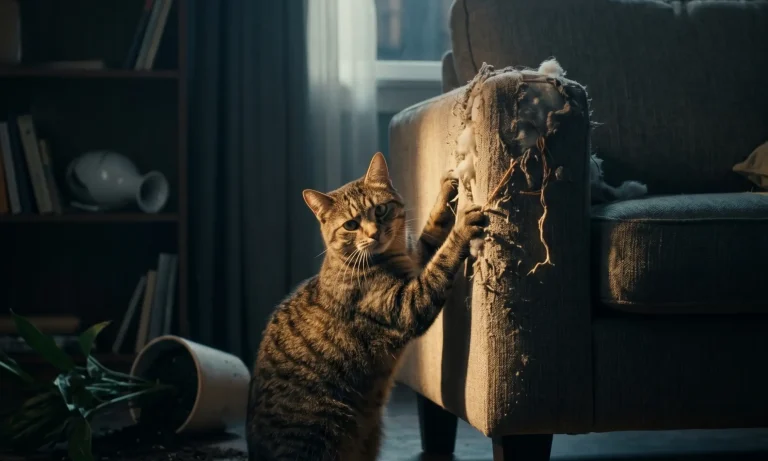
Living with a cat often feels like sharing a home with a silent partner. Because cats don’t use words, they communicate through a complex behavioral language that frequently goes unnoticed — or worse, misunderstood. When your cat starts “acting out” — avoiding the litter box, shredding furniture, or hiding under the bed — frustration is a natural first response. But what looks like bad behavior is almost always a distress signal.
To truly support your cat, you need to step into the role of the behavioral detective. Every unusual action is a clue. Here is exactly what your cat is trying to tell you, structured around the three core pillars of feline stress: physical, territorial, and relational.
If your cat is displaying any behavior they have never shown before, consult a veterinarian first. Rule out physical pain or illness before attributing changes to environmental stress. This is non-negotiable. Only once your vet gives the all-clear should you begin investigating behavioral triggers.
The Stoic Mask: How Cats Hide Their Suffering
Cats are evolutionary masters of concealment. In the wild, displaying weakness or pain marks an animal as a target — and this survival instinct is deeply embedded in the domestic cat’s nervous system. Cats are biologically programmed to hide pain, whether it is physical or emotional. By the time you notice something is “just a little off,” your cat may have been suffering for weeks.
“Cats are almost programmed to hide their pain — to be very stoic — whether that is physical pain or whether that’s emotional or mental pain.”— Jackson Galaxy, Cat Behaviorist
This stoic tendency is why the physical manifestation of stress most commonly shows up in the digestive system. Watch for these two distinct patterns:
Persistent vomiting, diarrhea, and sudden loss of appetite with no identifiable dietary cause — often tied to ongoing household tension or environmental anxiety.
A cat who feels territorially threatened will eat at high speed and immediately vomit. This happens because they feel compelled to consume their resources before a perceived threat can interfere with access to food.
Digestive symptoms with no dietary change, dramatic shifts in eating pace or volume, and food guarding behaviors are all physical indicators that your cat feels unsafe — not sick.
Grooming as “Nail-Biting”: The Over-Grooming Signal
When a cat feels overwhelmed but cannot directly address the source of their stress, they redirect that energy into displacement behaviors — the feline equivalent of a human biting their nails, pacing, or stress-eating. In cats, this most commonly manifests as compulsive, frantic grooming.
There is a critical difference between normal grooming and stress-induced grooming that every cat owner should know:
Slow, languid, and relaxed. The cat settles into a comfortable position and grooms methodically. The body language is loose. This is a sign of security and contentment.
Sudden and frantic in quality. The cat may stop mid-movement, then begin grooming with intense, determined urgency — not to get clean, but to self-soothe. If unchecked, this leads to bald patches on the belly or inner legs.
If you notice missing fur on your cat’s belly, inner thighs, or flanks, your cat has likely been self-grooming compulsively in response to a hidden stressor. This condition — known clinically as psychogenic alopecia — warrants both a veterinary visit and a behavioral assessment of your home environment.
Psychogenic alopecia in cats is defined as fur loss caused by excessive grooming linked to anxiety or stress, not an underlying skin condition. It is one of the most underdiagnosed feline stress symptoms because the skin itself looks normal.
The “Alamo” Defense: Perimeter Marking and Redirected Aggression
A cat’s sense of psychological security is directly tied to their ownership of their territory. When that territory is perceived as threatened — by stray cats, wildlife, or other animals outside the home — cats enter a defensive state that manifests in several distinct ways.
During periods when outdoor animals are active (such as mating season, when unneutered cats spray and vocalize near homes), your indoor cat’s stress levels will spike dramatically. Common territorial stress responses include:
- Perimeter marking — urinating near windows or exterior doors to reinforce territorial boundaries against perceived outside invaders
- Withdrawal from “Cat TV” — a previously window-watching cat who suddenly hides under the bed is no longer feeling safe enough to observe; the threat feels too close
- Redirected aggression — a cat in high-alert mode (scanning for threats) who is suddenly touched may bite or scratch; this is hypervigilance, not hostility
Think of perimeter marking like the Alamo. The cat is desperately fortifying their walls, telling outside threats: “This territory belongs to me.”— Jackson Galaxy, Cat Behaviorist
To reduce territorial stress from outdoor threats, use frosted window film on lower panes, try pheromone diffusers (such as Feliway), and work with a local TNR (Trap-Neuter-Return) organization to address feral cat activity near your property.
The New Arrival: How Changes in the Home Destabilize Your Cat
The third pillar of feline stress is relational. Cats thrive on rhythm — the predictable pattern of daily life gives them the confidence to function securely. When that rhythm is disrupted, even by positive changes like a new baby, a new partner, or a new pet, the behavioral fallout can be significant.
Separation anxiety is one of the most underrecognized forms of relational stress in cats. Many indoor cats experienced this acutely when owners returned to full-time office work after extended periods at home. Signs include:
- Defecating on the owner’s bed (scent-blending to reinforce connection)
- Excessive vocalization when left alone
- Destructive behavior confined to the owner’s personal items or spaces
- Clinginess before departure and extreme reaction upon return
New people and animals bring unfamiliar sounds, smells, and movement patterns. Without sufficient vertical space — shelves, cat trees, elevated perches — a cat who feels encroached upon by a new housemate has nowhere to go. This is where the concept of Catification becomes critical: structuring your home so that every cat has access to high ground, safe retreat zones, and escape routes that dogs or toddlers cannot follow.
If a dog can access the litter box area, your cat may avoid using it entirely — choosing an alternative, “safer” spot like a rug. The litter box must be in a dog-free zone.
Unfamiliar scents and sounds — especially infant cries — trigger threat responses. Introduce new smells gradually before the person arrives, and preserve at least one space as exclusively the cat’s own.
The Energy Balloon: Why Structured Play Is a Medical Necessity
When a household is crowded, loud, or unpredictable, the environment becomes what behaviorists call an “energy balloon” — filling with unresolved tension until it bursts in the form of aggression, spraying, or destruction. Structured daily play is the pressure-release valve.
A proper play session — using a wand toy or other interactive tool — allows a cat to arc their predatory energy through a complete prey sequence: stalk, chase, catch, consume. Ending each session with a small meal activates the natural post-hunt rest state, helping your cat settle completely.
To provide lasting structural protection against stress, every cat guardian should implement the Three R’s framework:
Environmental predictability is consistently cited in feline behavioral research as the single most impactful factor in reducing chronic stress in indoor cats. More than toys, more than space — routine is the foundation.
Quick-reference summary
- If your cat shows any new behavior, rule out physical illness with a vet visit first.
- Digestive symptoms with no dietary cause — chronic vomiting, diarrhea, or “snarf and barf” eating — indicate stress, not just a sensitive stomach.
- Frantic, sudden grooming (especially leaving bald patches) is a displacement behavior triggered by unresolved stress.
- Perimeter marking near windows or doors signals a territorial threat from outside; address the external trigger, not just the symptom.
- Relational disruptions — new people, pets, or schedule changes — require vertical space (cat trees, shelves) and gradual scent introductions.
- Daily structured play and the Three R’s (Routine, Ritual, Rhythm) are the most effective long-term interventions for chronic feline stress.
Frequently Asked Questions About Cat Stress
The most common signs of stress in cats include litter box avoidance, compulsive over-grooming leading to bald patches, chronic vomiting or diarrhea, hiding or reduced window-watching, redirected aggression, and perimeter marking (urinating near windows or doors). These behaviors span three core stress categories: physical, territorial, and relational.
A cat urinating near windows or exterior doors is most likely engaged in perimeter marking — a territorial stress response triggered by the detection of outdoor threats such as stray cats or wildlife. The cat is attempting to reinforce their territorial boundaries against a perceived invasion.
Stress-induced grooming is sudden and frantic — your cat may stop mid-movement and begin grooming with intense urgency. The key physical sign is missing fur on the belly, inner thighs, or flanks. This condition is called psychogenic alopecia, and it distinguishes itself from medical skin conditions because the skin underneath the bald patches appears normal.
Cats that defecate on their owner’s bed are most often experiencing separation anxiety. The behavior is a form of scent-blending: the cat is depositing their scent in the place they associate most strongly with their owner, attempting to reinforce that bond and feel more secure in the owner’s absence.
The Three R’s for reducing feline stress are: Routine (performing feeding and play at identical times each day), Ritual (being fully present and engaged during those interactions), and Rhythm (the predictable life pattern that results when routines are repeated consistently over time). Cats are highly sensitive to environmental predictability, and disruption to daily rhythm is one of the primary triggers of chronic stress behaviors.
Yes. New people and animals introduce unfamiliar scents, sounds, and movement patterns that can significantly disrupt a cat’s sense of territorial security. To reduce this stress, introduce the new person’s scent to the cat before they arrive, ensure the cat has vertical escape routes (cat trees, shelves) that the new household member cannot access, and maintain the cat’s daily routine as consistently as possible during the transition period.
From Frustration to Guardianship: A Different Frame
Destructive behaviors are not signs of a “bad” cat or a spiteful one. They are manifestations of suffering from an animal who lacks the tools to communicate distress directly. When you find a shredded couch or a mess on the floor, the most effective thing you can do is detach from your own frustration and approach it as information.
Your cat has not forgotten their manners. They have forgotten that they are safe. Your role is to help them remember. By reading the behavioral signals accurately, removing or addressing the underlying stressors, and providing the structural foundations of routine and rhythm, you can guide your cat back to a state of confidence and calm.
The next time your cat makes a “mistake,” remember: it’s not a mess to be cleaned. It’s a message to be decoded.