How to Correct Bad Behavior in Cats: The Evidence-Based Method
Most cat behavior correction fails because it targets the symptom rather than the cause. Here is the evidence-based method that works — based on how cats actually learn.
Why Punishment Fails
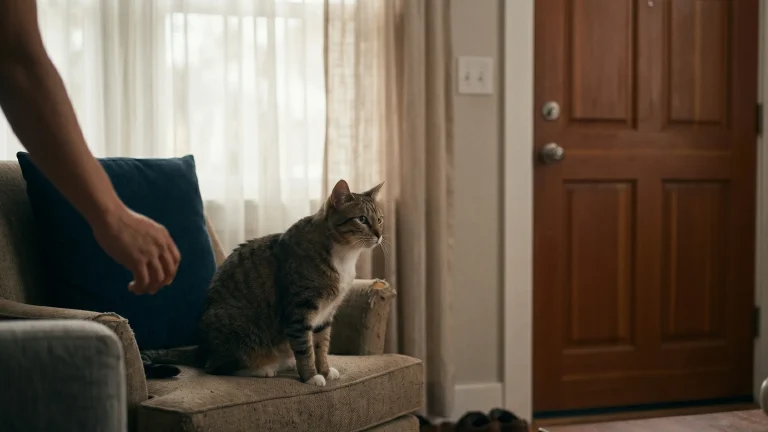
Cats do not learn from punishment delivered after the fact. For a consequence to modify behavior, it must occur within one to two seconds of the action. When an owner scolds a cat after finding a scratched sofa, the cat cannot connect the scolding to the scratching that occurred earlier. It learns only that the owner is unpredictably dangerous.
More critically, clinical research demonstrates that aversive training methods — including physical punishment, spray bottles, and loud noises — significantly increase fear and anxiety in cats.[2] Because anxiety is a primary driver of many problem behaviors (such as aggression, inappropriate elimination, and destructive behaviors), using punishment often exacerbates the very problems owners are trying to solve.
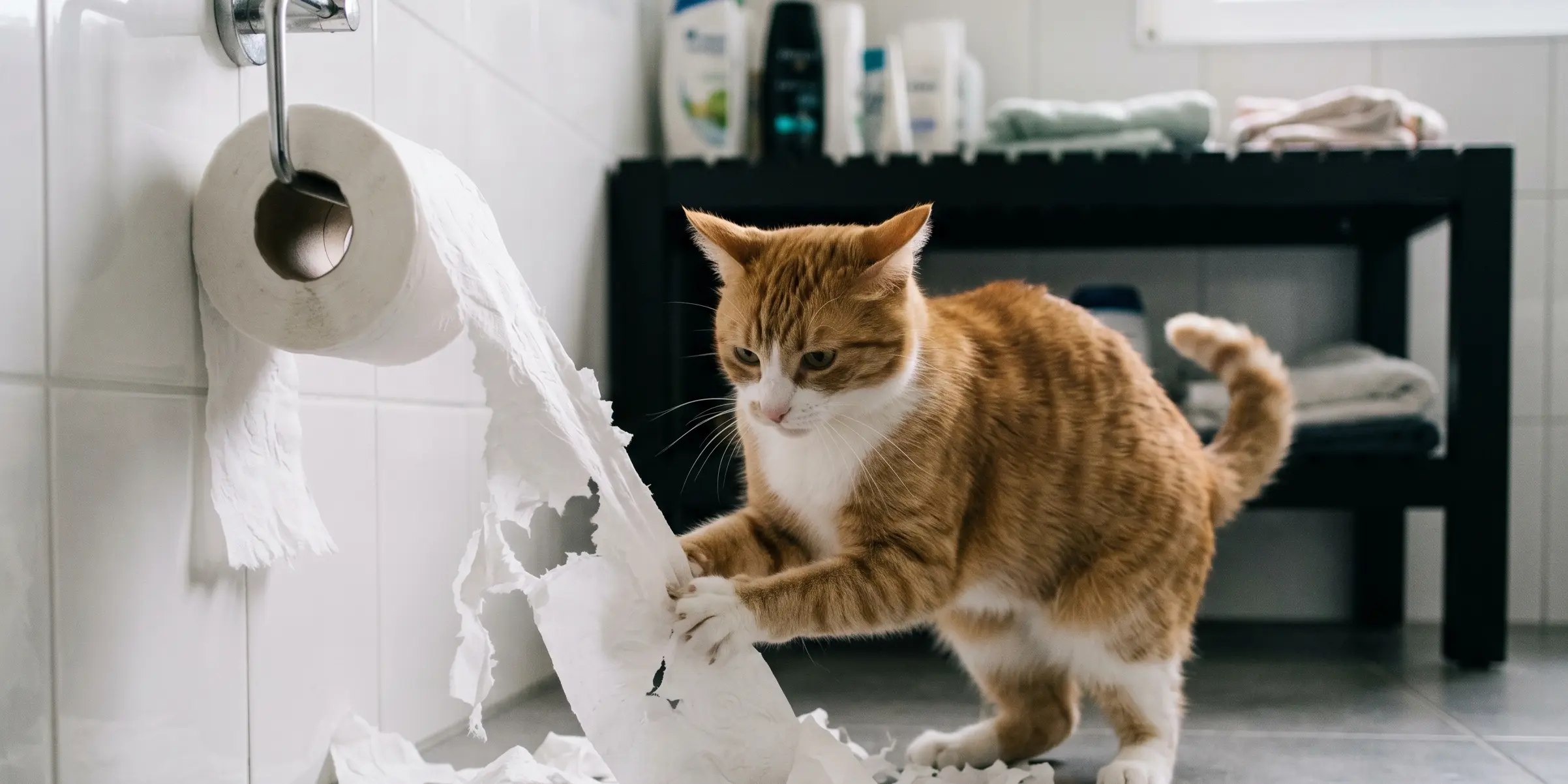
There is no such thing as a “bad” cat behavior in isolation. Every behavior the cat performs serves a function from the cat’s perspective — it expresses a drive, avoids discomfort, or gains a resource. Effective correction means understanding that function and providing a better outlet, not eliminating the behavior through force.
The Three-Part Correction Framework
Every unwanted cat behavior responds to the same three-part approach, applied in this logical order:
1. Identify and Manage the Trigger or Motivation
Ask: what does the cat gain from this behavior? Scratching provides claw maintenance and scent marking. Jumping on kitchen counters provides elevated safety and food access. Biting ankles expresses predatory play drive. The trigger or motivation defines the intervention.
2. Provide an Appropriate Alternative
Give your cat a high-quality outlet for the same drive. The alternative must be at least as satisfying as the problem behavior. This requires understanding that the problem location has specific qualities the cat values (e.g., texture, height, or window views) and matching those qualities in the new setup.
3. Make the Problem Location Less Rewarding
Passive deterrents — double-sided tape, aluminum foil, citrus scents, or motion-activated air puffs — reduce the attractiveness of the problem area without requiring your presence.[1] Combined with an attractive alternative nearby, these create a clear preference shift in most cats within one to two weeks.
Correcting Destructive Scratching
Scratching is a fundamental biological need, not a behavioral flaw. It allows cats to groom their claws, deposit scent marks from paw glands, and stretch their spines. Because it is an instinctual drive, you cannot train a cat to stop scratching completely. Instead, you must guide them to appropriate targets.
Why Most Scratching Posts Fail
The primary reason scratching posts are ignored is poor design. A suitable post must be:
- Tall enough: At least 90 cm tall for an adult cat to fully stretch.
- Stable: Heavy enough that it does not wobble or tip under force. A post that moves will be abandoned immediately.
- Correct Material: Made of sisal rope, cardboard, or natural wood. Avoid posts covered in carpet, as they teach the cat that household rugs are acceptable scratching substrates.
Placement Matters
Scratching posts placed in quiet corner rooms are rarely used. Cats scratch in prominent social areas and near sleeping zones to mark territory. Place the primary post adjacent to the cat’s main sleeping spot or right next to the sofa they have been targeting.
The Deterrent Strategy
Apply double-sided sticky tape or anti-scratch sheets to the targeted furniture, and place the new, sturdy post directly adjacent to it. The sticky texture deters the cat, while the nearby post offers the perfect scratching outlet. Most cats transition within three to seven days.
Correcting Play Biting and Ankle Attacks
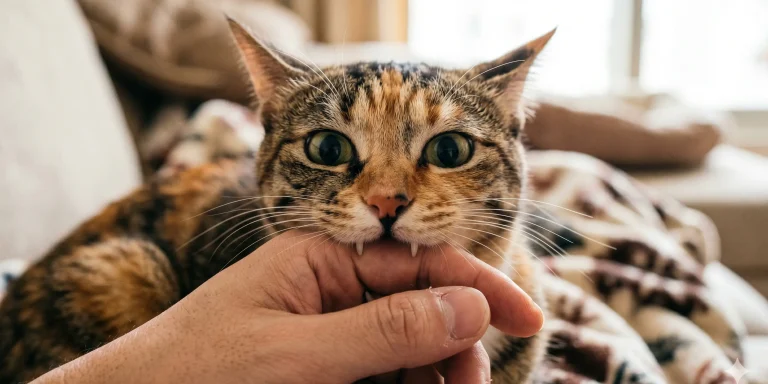
Play biting and ankle ambushes are common in cats under two years old. They represent natural predatory play behavior directed at human movement. The solution is providing a structured, safe outlet for their predatory drive:
- Conduct two dedicated interactive play sessions of 15 to 20 minutes per day using wand toys to keep hands at a safe distance.
- If bitten or attacked, freeze completely. Do not pull away or push back (which increases excitement). Wait for the cat to release, then end the session and withdraw your attention immediately.
- Never use your hands or fingers as toys. Doing so establishes hands as legitimate play targets.
- End play sessions by offering a small food treat and a kickable toy. This satisfies the “catch and kill” sequence of hunting, which lowers baseline arousal.
Many biting incidents occur because play sessions are ended abruptly, leaving the cat at peak predatory arousal with nowhere to direct it. Always wind down a play session over three to five minutes — slow the wand toy movement, allow the cat to catch and hold it, then present a small food reward. This completes the predatory sequence and reduces the chance of a post-play bite.
Correcting Counter-Surfing and Kitchen climbing
Cats climb to high surfaces because height provides safety and a clear vantage point for monitoring territory. Punishing a cat for climbing on kitchen counters ignores their biological need for vertical space.
To resolve counter-surfing permanently, provide a superior vertical alternative: a tall cat tree positioned near a window, wall shelves, or a high observation perch. Once you establish the new high-ground, make the counters unattractive by applying double-sided tape or a pet-safe citrus spray (cats dislike citrus scents).
Correcting Nocturnal Behavior Problems
Nighttime vocalizations, running, and waking of owners are common disruptions. The cause is usually daytime under-stimulation, hunger during the night, or cognitive decline in senior cats.
For young cats, implement an intensive play session with a wand toy one hour before bedtime, followed immediately by their largest meal of the day. This mimics the natural hunt-eat-groom-sleep cycle, ensuring they remain settled through the night.
Realistic Timelines for Cat Behavior Correction
Consistency is the key to modifying feline behavior. Expect the following timelines when applying these protocols:
- Destructive Scratching: 1 to 2 weeks of post placement and furniture taping.
- Play Biting: 2 to 4 weeks of consistent wand-play routines.
- Counter-Surfing: 2 to 3 weeks of providing trees and counter deterrents.
- Nocturnal Disturbances: 1 to 2 weeks of pre-bed play and meal timing.
- Litter Box Issues: 1 to 4 weeks (ensure all medical causes are ruled out first).
Frequently Asked Questions
How do you discipline a cat effectively?
Effective cat behavior correction does not use discipline in the traditional sense. Cats do not connect after-the-fact punishment to a previous behavior. The correct approach is: identify the motivation behind the behavior, manage or remove the trigger, provide an appropriate alternative outlet, and use passive deterrents to make the problem behavior less accessible. This addresses the cause rather than the symptom.
Does spraying a cat with water stop bad behavior?
No. The cat learns to avoid the behavior when you are present — not to stop the behavior. It also increases fear and anxiety, which drives many problem behaviors. Research consistently shows that aversive training methods produce more fear-related problem behavior over time, not less. Passive deterrents (tape, foil, citrus) are more effective and do not damage the cat-owner relationship.
How long does it take to correct cat behavior?
Most manageable problem behaviors show significant improvement within one to four weeks of consistent intervention. Scratching and nocturnal disturbances typically respond within one to two weeks. Aggression and anxiety-based behaviors may take four to twelve weeks depending on severity. Consistency is more important than intensity — one correct intervention applied consistently every day outperforms intensive sessions followed by gaps.
How long should I ignore my cat after bad behavior?
Attention withdrawal works for attention-seeking behaviors — vocalisations, gentle pawing, jumping on you while you work — where the cat’s motivation is your response. For these behaviors, completely ignoring the behavior (no eye contact, no speaking, no touch) until it stops, then immediately rewarding quiet behavior, is effective. For behaviors driven by other motivations — scratching, litter box problems, aggression — attention withdrawal has no effect, because your attention is not what the cat is seeking.