Safeguarding Your Sanctuary: A Complete Guide to Managing Outdoor Cat Interlopers
If an outdoor cat is tormenting your indoor cat, you must intervene immediately to restore the safety and sanctity of your home. A resident cat living under the constant threat of an interloper is a cat in a state of chronic physiological stress — and the consequences are far more serious than most owners realize.
The solution requires a professional three-pronged strategy: environmental management to secure the home boundary, humane behavioral deterrents to discourage the visitor, and community diplomacy to address the root of the intrusion. Unresolved territorial tension leads to elevated cortisol levels and behavioral degradation that can permanently impact your pet’s well-being.
If your cat is displaying any behavior they have never shown before, consult a veterinarian first. Rule out physical pain or illness before attributing changes to environmental stress. Only once your vet gives the all-clear should you begin investigating behavioral triggers.
The Senior Cat’s Vulnerability: Health Risks of Feline Conflict
The health of a senior cat must be the primary strategic priority in any territorial conflict plan. As cats reach their mid-teens, their physiological resilience diminishes significantly. Their ability to fight off infections, recover from injuries, or manage the systemic toll of chronic stress is far lower than it is in a younger animal.
Sustained high cortisol levels suppress immune function, accelerate organ aging, and drive behavioral breakdown — all of which compound rapidly in cats over 12 years old.
Physical encounters result in deep puncture wounds — the primary vector for disease transmission via blood and saliva. For a senior cat, these infections can trigger rapid systemic decline.
High-quality supplements can support the immune system and help regulate stress hormones — but they are a secondary support. The primary medicine is removal of the external stressor.
The Cat Burglar: How Your Resident Cat Sees the Intruder
To implement a successful behavioral plan, you must understand feline territorial perception rather than projecting human values onto the situation. You might look out the window and see a “friendly-looking” or innocuous cat — but your resident cat sees a burglar attempting to breach their home boundary.
Even if the intruder appears adorable and harmless through the glass, your resident cat perceives them as an active territorial threat. There is no greater perceived danger to an indoor cat than an intruder appearing at the boundary of their sanctuary.— Certified Feline Behaviorist
This perception is further intensified by biology. If the interloper is un-spayed, they are broadcasting potent territorial hormones. To your resident cat — even a spayed one — these hormones signal that the territory is under immediate threat, driving the extreme reactions we see inside the home: hiding, aggression, spraying, and withdrawal.
Reclaiming the Home Boundary: The Three Pillars of Deterrence
To restore your resident cat’s sense of ownership, use humane aversives to change the interloper’s cost-benefit analysis of entering your property. The goal is to convince the visitor that your yard is no longer worth the trouble — without causing harm to any animal.
Motion-activated deterrents are training tools, not permanent fixtures. The behavioral change typically persists after they are removed — the interloper has simply learned that this particular territory is not worth visiting.
Feral vs. Owned: Identifying the Intruder and Engaging the Community
Before approaching anyone, determine the cat’s status. A tame cat shows no fear of humans, windows, or other cats — indicating socialization and likely an owner. A feral cat is a community cat that avoids human contact and keeps low and cautious around people.
Approach the neighbor calmly. Frame the conversation around mutual cost avoidance — vet bills, bite wound infections, disease risk for both cats. Propose a schedule where the neighbor keeps their cat in during specific hours so your cat can enjoy the yard safely.
Contact a local TNR (Trap-Neuter-Return) organization. Neutering removes the hormonal signals that broadcast territorial competition — dramatically reducing your indoor cat’s stress response to the intruder’s presence.
Avoid leading with anger about roaming — this triggers defensiveness and closes the conversation before it starts. Focus on shared costs and shared solutions.— Certified Feline Behaviorist
If the cat appears tame but is homeless, fostering them in a separate, completely isolated room — with zero contact with your resident cat — is a viable path toward finding them a permanent home while protecting your cat throughout the process.
Visual Barriers: The Essential Interim Solution
While long-term deterrents and diplomacy are underway, provide your cat with immediate relief by eliminating their direct sight lines to the interloper. Use cardboard, frosted window film, or removable privacy panels to obscure the windows where the visitor typically appears.
Barriers must be positioned at the cat’s eye level. If your resident cat does not have a direct line of sight to the intruder, the immediate visual trigger is removed — and the “territory is on fire” stress response is interrupted at its source.
This is an essential tactical measure, not a permanent solution. But for a senior cat already carrying the physiological burden of chronic stress, removing the visual trigger even temporarily makes a measurable difference to their daily well-being while the longer-term interventions take effect.
Once the external threat is resolved, window access can be gradually restored — starting with high perches that give your cat a confident vantage point rather than a vulnerable ground-level view.
Quick-reference summary
- If your cat shows any new behavior, rule out physical illness with a vet visit before investigating behavioral triggers.
- A resident cat’s extreme reaction to an outdoor interloper is physiological — elevated cortisol, hormonal responses — not a personality flaw.
- Stop feeding or interacting with the interloper immediately; rewarding their presence subsidizes the harassment of your own cat.
- Motion-activated hose deterrents are humane, effective, and temporary — most intruders are retrained after 3–5 encounters.
- For owned cats, frame neighbor conversations around shared cost avoidance; for feral cats, contact a local TNR organization.
- Block sight lines at your cat’s eye level as an immediate interim measure — visual access to the intruder is the primary trigger of the stress response.
Frequently Asked Questions About Outdoor Cat Interlopers
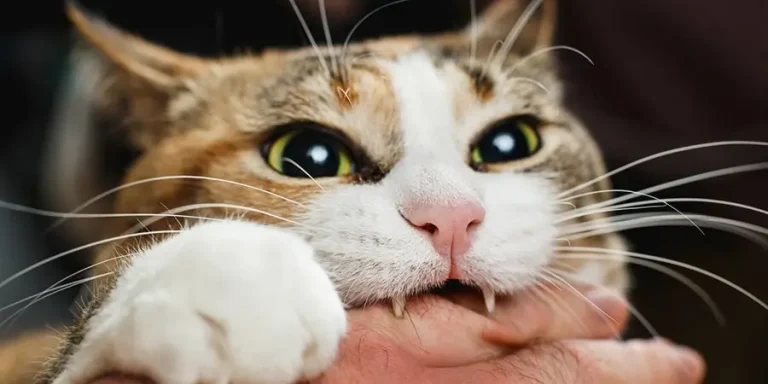
This is redirected aggression — one of the most commonly misunderstood feline behaviors. Because your cat is physically unable to reach the intruder, frustration and territorial stress hormones build to a breaking point. Unable to discharge that energy toward the actual source, they redirect it toward the nearest available being — typically their owner. This is an involuntary physiological response, not a sign of a damaged relationship or a “bad” cat.
No. A motion-activated hose is a well-established, humane training tool. It provides a brief, harmless aversive stimulus that the cat associates with a specific location — not with a person. Behaviorally, this is an ethical boundary-training method. It causes no lasting harm and serves the greater good of protecting your resident cat’s long-term health and quality of life.
Your perception of the visiting cat’s friendliness is irrelevant to your resident cat’s experience. Feline territorial perception is based on boundary violation, not the personality or intentions of the intruder. A cheerful, gentle cat crossing into perceived territory registers as an identical threat to an aggressive one — the hormonal and behavioral response in your indoor cat will be identical either way.
Tame or owned cats are acclimated to human environments: they approach windows, make eye contact with people, and show little fear of human proximity. They are also typically well-groomed. Feral cats are community cats raised without human socialization — they avoid direct contact, keep low, and move cautiously. A tipped ear (the universal symbol of Trap-Neuter-Return programs) confirms a managed community cat.
The primary risk is disease transmission through bite wounds, which deliver blood and saliva directly into deep tissue — a highly efficient transmission route. Specific risks include Feline Leukemia Virus (FeLV), Feline Immunodeficiency Virus (FIV), feline herpesvirus, and bacterial infections such as Pasteurella. For a senior cat whose immune system is already compromised by age, any of these infections can trigger rapid systemic decline. Bite wounds seal over quickly, making them easy to miss before infection sets in.
From Reaction to Guardianship: A Different Frame
Territorial behaviors are not signs of a difficult cat. They are manifestations of an animal who feels unsafe in their own home and lacks the tools to communicate that distress directly. When you witness spraying, aggression, or withdrawal, the most effective response is to detach from frustration and approach it as information.
Your cat has not forgotten their manners. They have forgotten that they are safe. Your role is to help them remember. By removing the external stressor, applying consistent deterrents, and addressing the root cause through diplomacy or TNR, you can restore the sense of security your cat needs to thrive.
The interloper is not the enemy. The situation is the problem — and it is entirely solvable.