Indoor Cat Enrichment for Anxiety: Veterinary-Backed Strategies for a Calmer Home
Before supplements or medication, veterinary-backed environmental enrichment can significantly reduce feline anxiety. Learn how to build a calming indoor environment for cats.
Why Environmental Enrichment Matters for Anxious Cats
Indoor cats often experience chronic stress due to limited stimulation, predictable routines, and lack of environmental complexity.
Environmental enrichment focuses on addressing behavioral needs rather than suppressing symptoms. In veterinary behavioral science, it is considered a first-line, non-pharmacological intervention for mild to moderate feline anxiety.
Key benefits include:
- Reduced stress-related behaviors
- Improved confidence and exploratory behavior
- Lower incidence of aggression or avoidance
- Better adaptation in multi-cat households
The Five Core Pillars of Feline Environmental Enrichment
A structured enrichment system is more effective than random toy rotation. These five pillars form a complete behavioral framework.
1. Safe and Predictable Spaces
Cats require control over their perceived safety.
Effective strategies include:
- Vertical spaces such as cat trees or wall shelves
- Enclosed hiding areas (boxes, tunnels, covered beds)
- Multiple escape routes in each room
Predictability reduces hypervigilance and anxiety-driven scanning behavior.
2. Resource Distribution and Separation
Competition over resources is a major stress trigger, especially in multi-cat homes.
Best practices:
- Separate litter boxes, food, and water stations
- Follow the “N+1 rule” for litter boxes (number of cats + 1)
- Place resources in different zones, not clustered together
This reduces territorial pressure and conflict behavior.
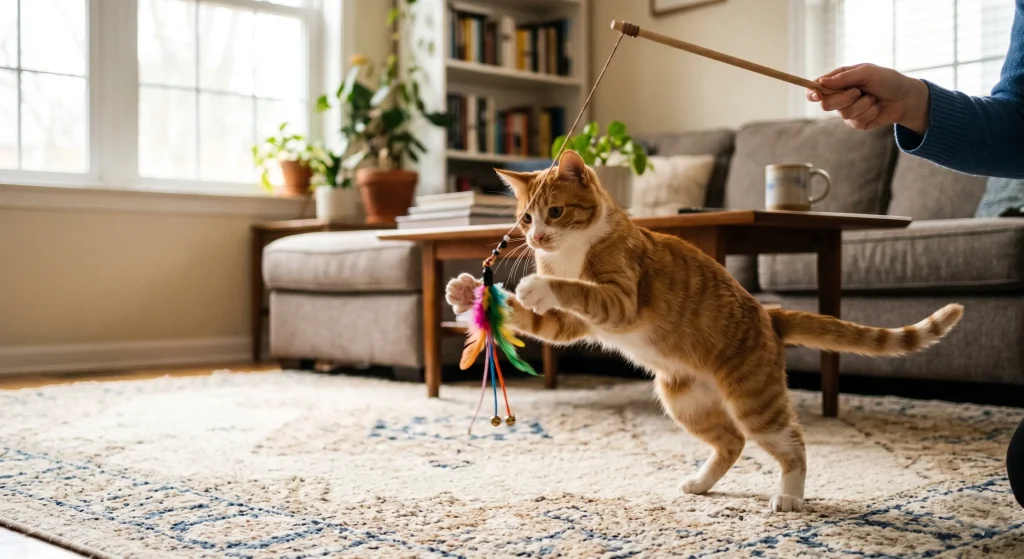
3. Predatory Play and Hunting Simulation
Play is not optional—it is a biological requirement.
Cats need to express the full predatory sequence:
stalk → chase → capture → kill → eat → groom → sleep
Recommended tools:
- Wand toys (interactive chasing)
- Puzzle feeders
- Short high-intensity play sessions (5–10 minutes)
Consistency is more important than duration.
4. Positive Human–Cat Interaction
Not all interaction is beneficial if it is overstimulating or unpredictable.
Guidelines:
- Allow cat-initiated contact
- Use calm, predictable routines
- Avoid forced handling or prolonged petting sessions
- Reward voluntary proximity
The goal is to build trust, not dependency or overstimulation.
5. Sensory and Environmental Stimulation
Indoor environments are often sensory-deprived.
You can enrich sensory input through:
Visual stimulation
- Window perches
- Bird feeders outside windows
- Safe outdoor observation zones
Auditory stimulation
- Soft ambient household sounds
- Controlled exposure to outdoor noise
Olfactory stimulation
- Rotated scent sources
- Cat-safe herbs like:
- Catnip
- Silvervine
- Valerian root
- Synthetic pheromone diffusers (feline facial pheromone analogs)
Scent Enrichment for Cat Anxiety Reduction
Olfactory enrichment is one of the most underused tools in feline behavior management.
To prevent habituation:
- Rotate scent stimuli every few days
- Avoid constant exposure to a single scent source
- Combine natural and synthetic olfactory cues
Common options:
- Catnip (stimulating or calming depending on cat)
- Silvervine (often stronger response than catnip)
- Valerian root (strong scent-driven engagement)
Signs Your Cat May Be Experiencing Environmental Stress
Behavioral indicators of chronic stress include:
- Excessive grooming or hair loss
- Withdrawal or persistent hiding
- Sudden aggression or irritability
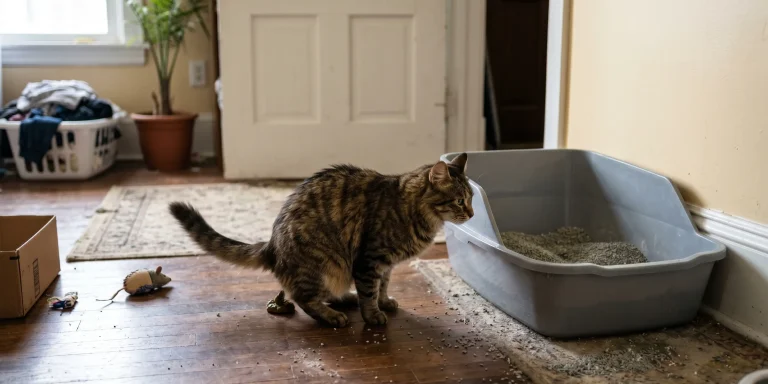
- Litter box avoidance
- Over-vocalization (especially at night)
- Hypervigilance (startle responses, scanning behavior)
These signs often indicate environmental mismatch rather than “bad behavior.”
When Environmental Enrichment Is Not Enough
Environmental changes are foundational, but not always sufficient.
Seek veterinary evaluation if:
- Anxiety is persistent or worsening
- There are signs of pain or medical illness
- Behavior escalates to aggression or self-injury
- Litter box issues persist despite environmental correction
Possible underlying causes:
- Chronic pain conditions
- Hyperthyroidism
- Neurological or behavioral disorders
Enrichment should be considered supportive therapy, not a substitute for diagnosis.
Building a Complete Indoor Anxiety-Reduction System
For long-term stability, enrichment should be integrated into a broader behavioral system:
- Structured feeding schedule
- Predictable daily routines
- Multi-cat hierarchy management
- Environmental zoning (activity vs rest zones)
- Controlled stimulation cycles
This creates a stable behavioral ecosystem rather than isolated interventions.